

A lot of Direct Primary Care marketing starts with ads, flyers, and employer pitches. Those can work for a while. Then the practice adds a second office or more doctors, and growth can start to depend on whoever has time to market that month.
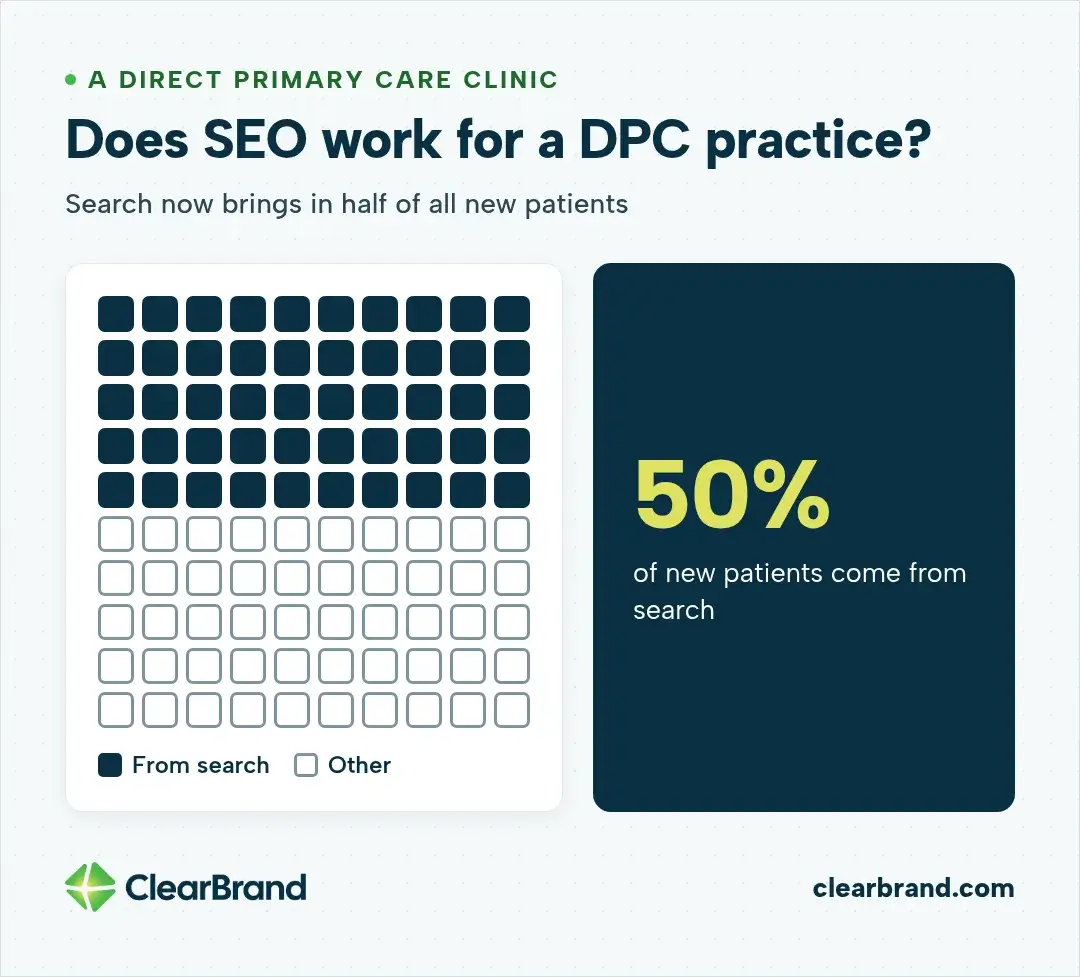
I want to show what it looks like when search becomes a real patient-acquisition channel instead. The example is a direct primary care clinic with two offices in Kansas. Search now brings in 50% of its new patients.
I wrote this for owners and operators running a practice group.
Does SEO Work for a Direct Primary Care Practice?
SEO works for a Direct Primary Care practice when the content answers the questions patients have before they switch doctors. The clinic now gets 50% of its new patients from search. The work centers on real prices, clear explanations of the membership model, doctor pages, and the same next step across the site: a free meet-and-greet.
Why Direct Primary Care Marketing Is Mostly Education
Many people looking for a new doctor have never heard of Direct Primary Care. Some confuse it with concierge medicine, which is often more expensive.
So a big part of the marketing is explaining the model. At this clinic, that means one monthly price, direct access to a doctor, unlimited office visits, and lower-cost medicine.
Patients who understand the model before they book tend to arrive closer to a decision, while those who don’t can get stuck on the price.
Concierge Medicine vs Direct Primary Care: The Confusion to Clear Up First
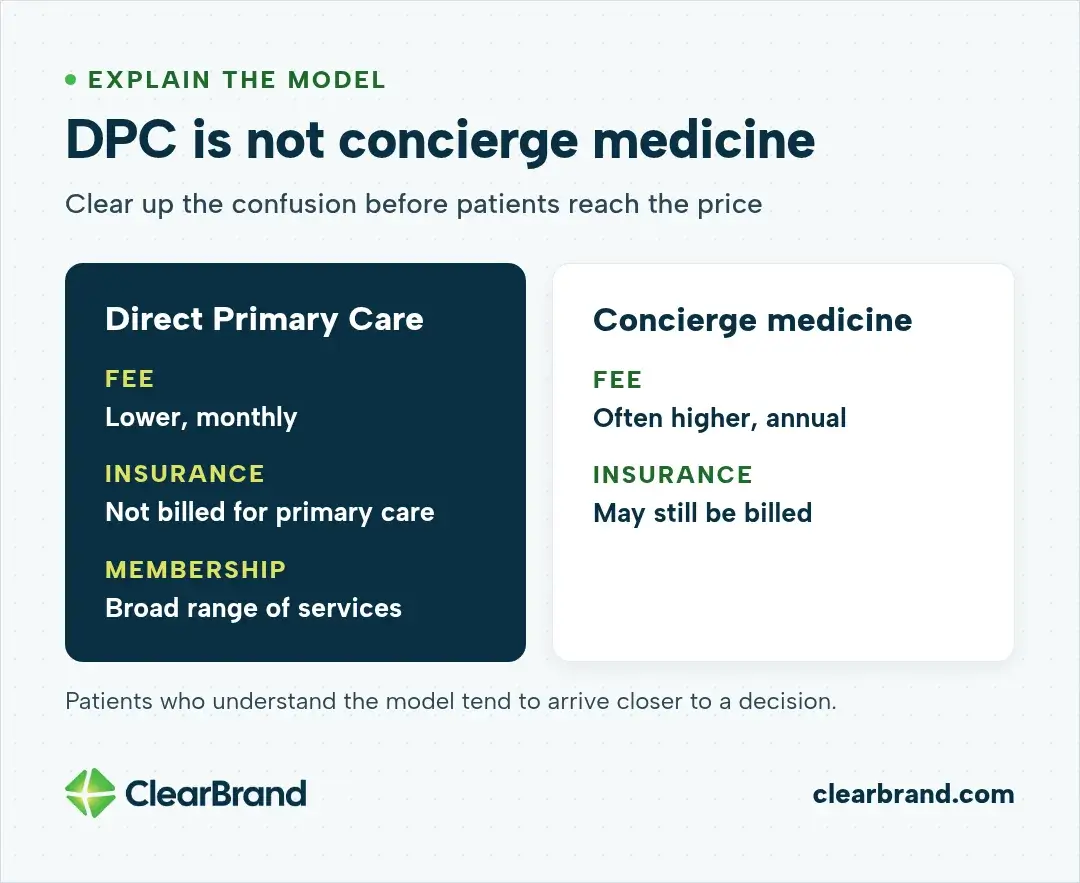
People who hear “membership” often picture concierge medicine. They usually differ in 3 ways. Direct Primary Care typically charges a lower monthly fee, doesn’t bill insurance for primary care, and covers a broad range of services in the membership. Concierge practices often charge higher annual fees and may still bill insurance.
The clinic says plainly on its own site that it doesn’t practice concierge medicine in the traditional sense. When a page clears this up early, people have one less reason to stop reading.
What Changes When Search Becomes a Channel Instead of a Campaign
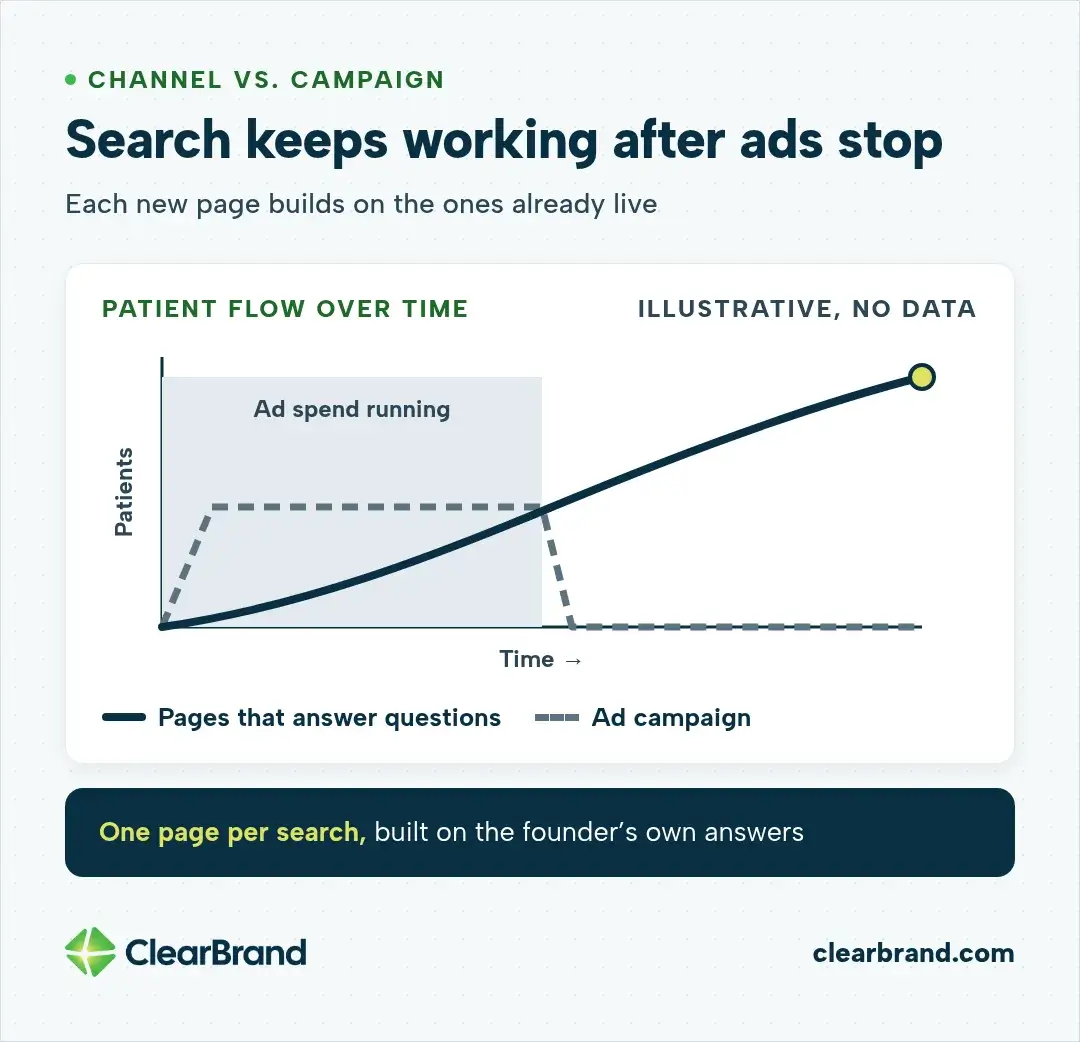
An ad campaign stops bringing in patients when the spending stops, but a page that answers a real patient question can keep bringing them in long after it goes live.
For a practice group, that makes growth easier to build on. Each new page builds on what the practice already has, and each new doctor or office can be introduced to people who are already searching.
The Work Has to Be Built on the Doctors’ Own Answers
With this clinic, we hold regular check-ins with the practice’s founder. His answers on prices, insurance timing, and same-day access go straight into the pages, so patients get first-hand answers before they ever book a visit.
One Page per Search
When several pages chase the same search, it gets harder for any one of them to rank. Our approach is to combine overlapping pages so each question has one page that answers it.
What Content Turns Searchers Into Direct Primary Care Patients
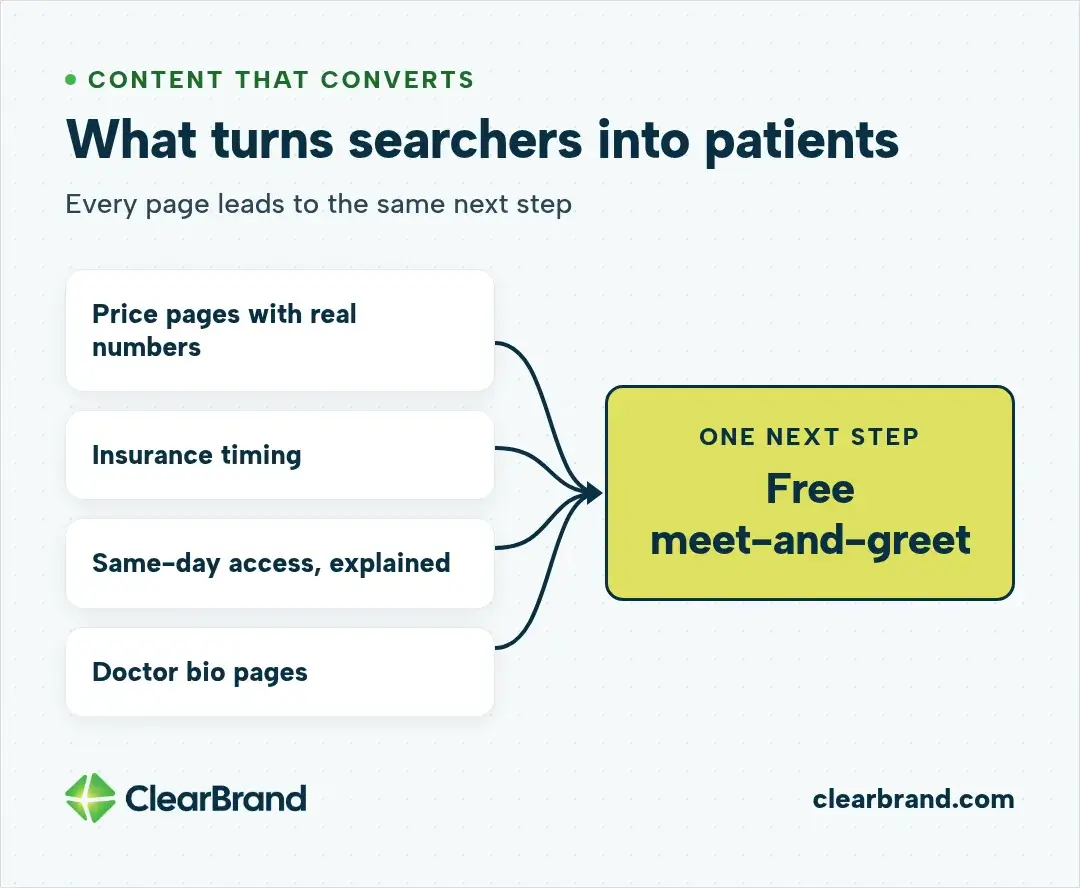
- Price pages with real numbers. People researching a membership want to know what it costs before they talk to anyone.
- Insurance timing. When to keep insurance, when it matters, and how the membership fits around it.
- Same-day access, explained plainly. What it looks like in practice.
- Doctor bio pages. Patients choose a doctor before they choose a model, so every doctor at the clinic has one.
- One next step. Pages lead to the same place: a free meet-and-greet.
Why Healthcare Content Needs Named Doctors and Review
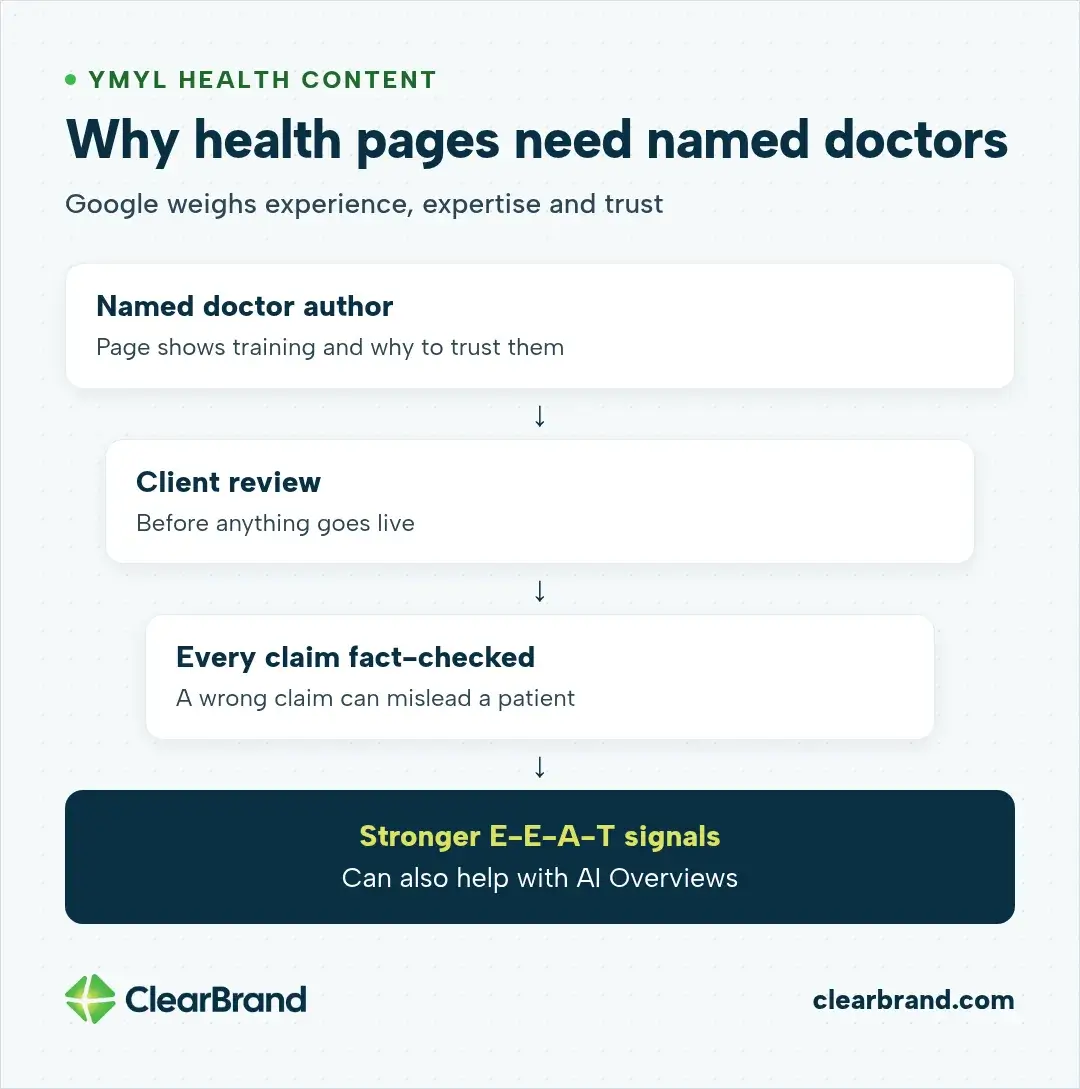
Google treats health content as “your money or your life” and gives extra weight to content that shows strong experience, expertise, and trust (E-E-A-T). Pages need a real, named author, ideally with a page showing they’re a doctor, where they trained, and why to trust them.
Our healthcare clients review content before it goes live, and we fact-check every claim. In health care, a wrong claim can mislead a patient, which matters far more than any ranking.
The same signals can help with AI Overviews, which tend to draw on pages that rank well and answer clearly. Our guide to healthcare SEO covers the full checklist.
How to Measure SEO When HIPAA Limits the Data
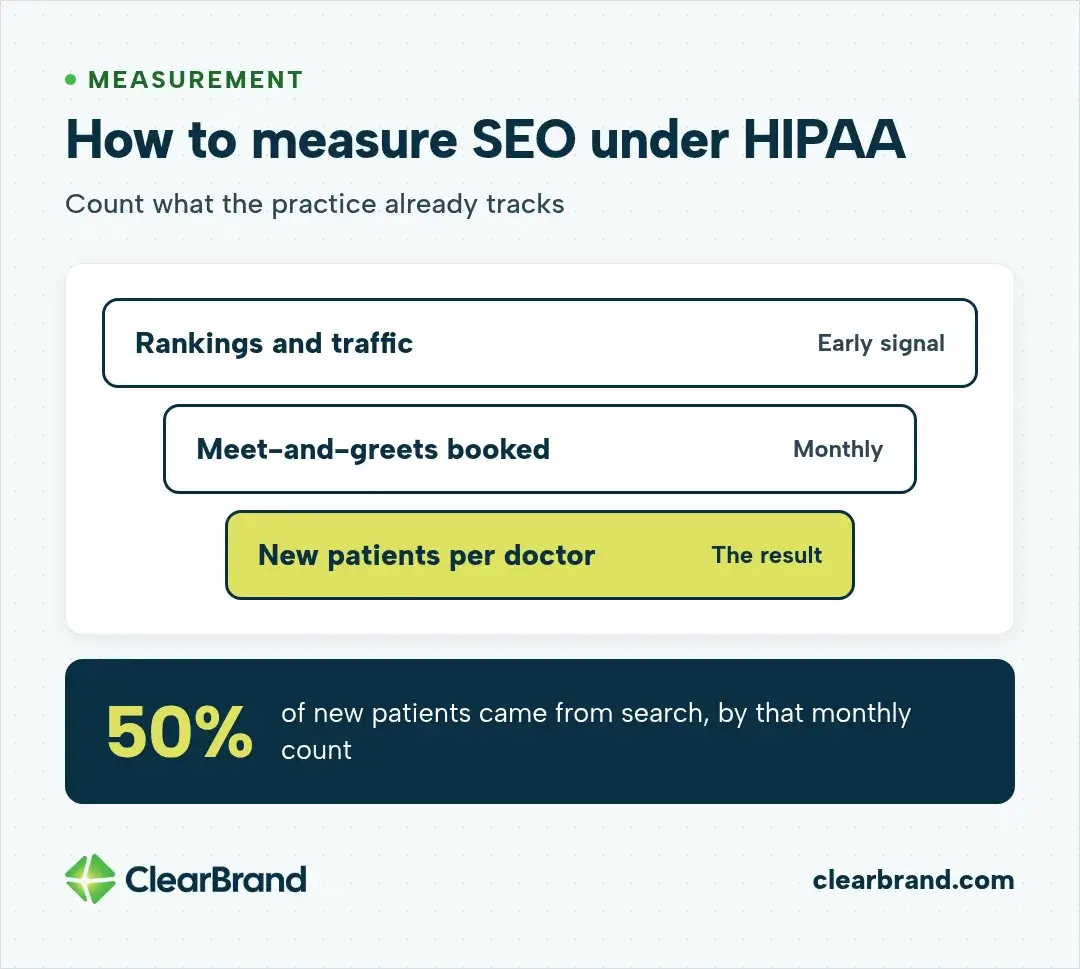
A health practice can’t hand over the patient-level data a software company would. So we measure what the practice already uses to run the business.
For this clinic, that means free meet-and-greets booked and the new patients added to each doctor’s panel every month, along with where those patients came from. That count is where the 50% comes from.
Rankings and traffic are early signals, and new patients are the result we’re working toward. I go deeper on this approach in how we measure SEO when clicks drop.
What Practice-Group Owners Should Take From This
- Treat search as a channel you own that keeps building over time, and work on it every month.
- Put doctors’ real answers on the page. Generic health copy tends to do less for people who are switching doctors.
- Measure new patients per doctor, not traffic.
- Make the next step the same everywhere.
If you run a group of practices and want to see where search could fit, here’s how we approach healthcare SEO for practices, and how we run SEO and AI search programs more broadly.
FAQ
What is Direct Primary Care marketing?
Direct Primary Care marketing is how a membership-based primary care practice attracts new patients. Most of it is education: explaining one monthly price, direct doctor access, and how the model differs from insurance-based care and concierge medicine.
What does DPC stand for, and how does the business model work?
DPC stands for Direct Primary Care, a model where patients pay a monthly membership directly to their primary care practice for access to their doctor and routine care. Because the practice earns from memberships rather than insurance billing for primary care, marketing has to explain that price and model before people book.
What is the best way to market a medical practice group?
A durable approach is content that answers real patient questions, written from the doctors’ own knowledge, with one clear next step on every page. The clinic gets 50% of its new patients from search with this approach.
How long does SEO take for a medical practice?
SEO for a medical practice builds over months, with impressions and clicks showing up before new patients do. The real measure is new patients over time, tracked by doctor and by office.
Get Your Free SEO Audit
If you want to see where search could bring new patients to your practice group, we’d be glad to take a look. Get your free SEO audit