

SEO for SaaS Startups: First Bets After You Have a Site
SEO for SaaS startups, once the product site exists: the first pages to build, how AI answers fit, when to wait, and how to measure trials and demos.
Written by Alexander Toth Originally published: November 23, 2026 Last updated: November 23, 2026
SEO for SaaS startups is the work of getting a software company found in Google and in AI answers for the searches buyers already run, then turning those visits into trials, demos, and customers. The first bets start once you have a product site you can keep improving.
The useful early work is narrow. Fix the technical foundation so pages can be crawled and load quickly.
Publish the high-intent pages buyers use to compare tools, look at alternatives, and check integrations. Then add a steady cadence of content that comes from your team’s real expertise, plus the brand mentions and backlinks that help that work travel.
If you’re a brand-new startup with no budget for content yet, we’re probably not the right fit, and SEO may not be the right first channel either. We focus on helping 7- and 8-figure companies.
If you already have a product, a site, and a way to talk about what you do, this is the order of work we’d start with.
Key takeaways
- Start SEO after the product site exists, not during a pre-product launch scramble.
- Build commercial-intent pages first: comparisons, alternatives, use cases, and integrations.
- Keep the site fast, crawlable, and clear enough that AI tools can quote it.
- Measure trials, demos, and customers from search, not traffic alone.
- Plan in months, not days. Early traction often shows up on long-tail pages first.
- If you can’t invest in content yet, it’s fine to wait until you can.
What is SEO for SaaS startups?
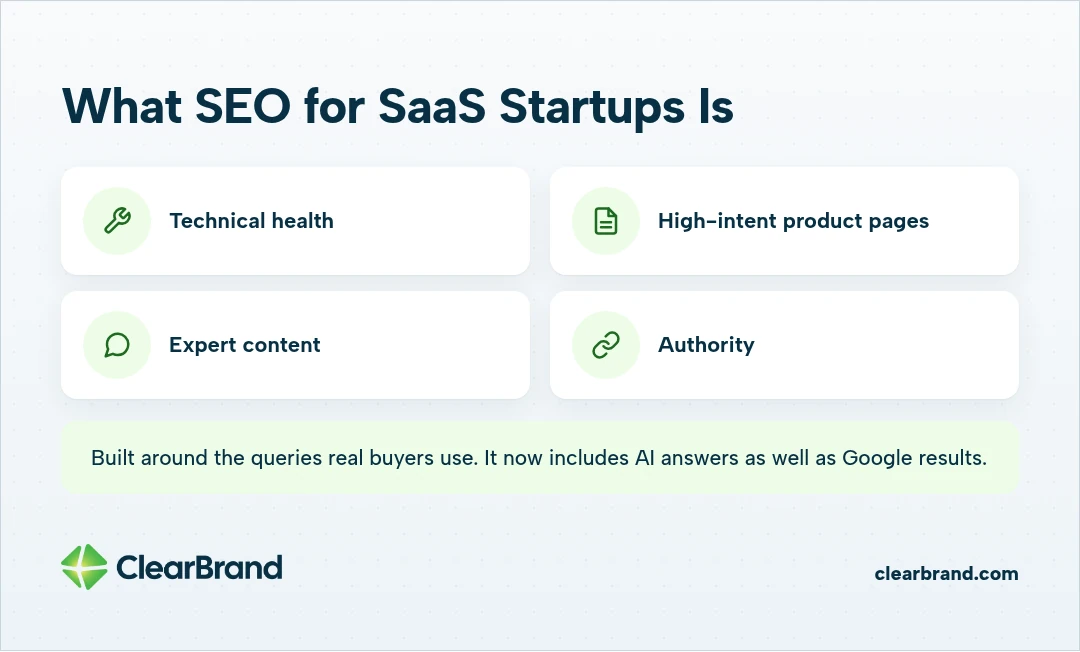
SEO for SaaS startups is search engine optimization for a software company that’s still early enough to feel resource constraints, built around the queries real buyers use to evaluate tools. It covers technical health, high-intent product pages, expert content, and authority, and it now includes visibility in AI answers as well as Google results.
It’s a tighter cut of SaaS SEO. The ranking systems are the same, and the difference is what you choose to publish first when the team is small.
Buyers rarely search your brand name first. They search the job, the category, and the tools they already have on a shortlist. Those are the terms worth winning early, even when a keyword tool shows modest volume.
What to do first once the product site exists
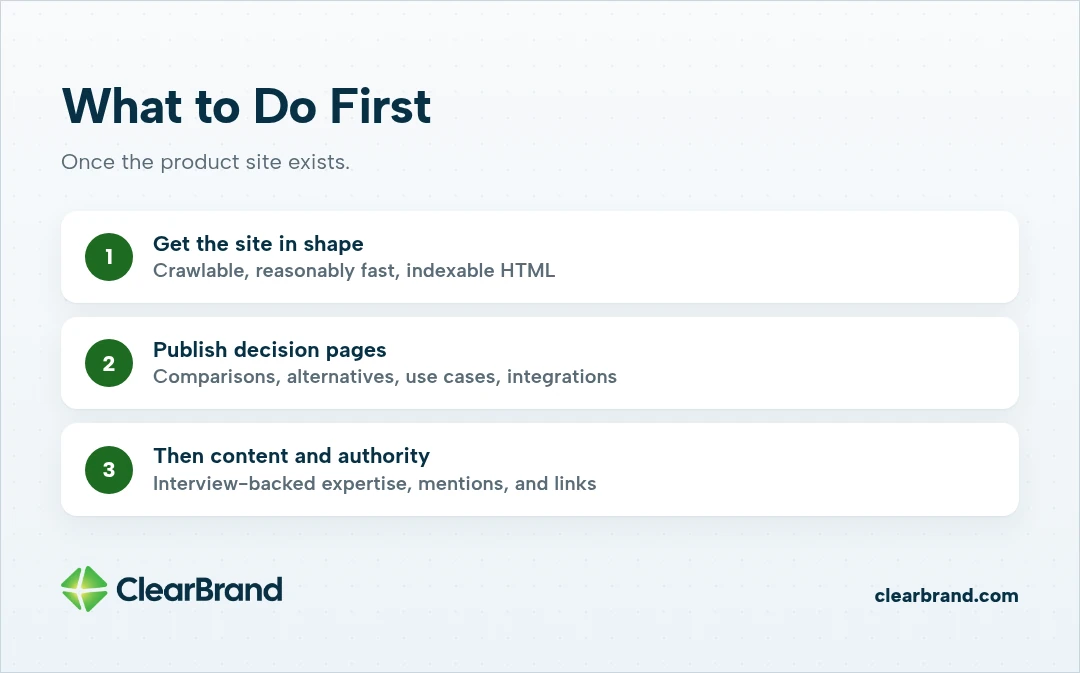
Once the product site exists, the first compounding bets are a crawlable, reasonably fast website, then a short set of high-intent pages that match how buyers evaluate software, then a realistic publishing cadence and a plan for mentions and links.
Get the site in shape to be found
If Google and AI crawlers can’t reach the page, or the important copy only appears after JavaScript runs, later content work is wasted. Prioritize indexable HTML, a clean sitemap, mobile-friendly pages, and Core Web Vitals that don’t drive visitors away.
Information architecture matters too. Group pages around the buyer’s path, not around an internal org chart. A visitor who lands on an alternatives page should be able to reach pricing, a use case, and a demo or trial without getting lost.
Publish the pages buyers use to decide
Comparison, alternatives, use-case, and integration pages usually convert better than a broad blog post that explains your category. A founder with limited writing time should start there, even when the search volume looks small. Those pages also give sales a URL to send when a prospect is already comparing options.
- Comparison pages for the two or three tools you actually lose to, written fairly, with facts a buyer can check.
- Alternatives pages for the category leader your buyer already knows.
- Use-case pages in the customer’s language, not your internal feature names.
- Integration pages for the systems your buyers already run.
You don’t need dozens of these on day one. A short list tied to real deals usually outperforms a content calendar full of general advice.
Then add interview-backed content and authority
After the decision pages exist, publish content that captures how your team actually talks about the product. Sales calls, customer questions, and founder opinions that a reader can’t get from a generic roundup are the raw material.
That’s the content model we use at ClearBrand. We run regular interviews with the client’s experts, then turn their expertise and opinions into pages other companies can’t easily copy. Technical SEO, that kind of content, and authority from brand mentions and backlinks are the three parts of the work.
Mentions on review sites such as G2 and Capterra can also help AI tools describe you accurately. So do clear, consistent facts about what the product is, who it’s for, and where it’s a poor fit.
How SaaS startup SEO should show up in AI answers
A modern SaaS SEO plan has to work in Google and in AI answer engines, because software buyers often start research in ChatGPT, Perplexity, or an AI Overview as well as in the classic results page.
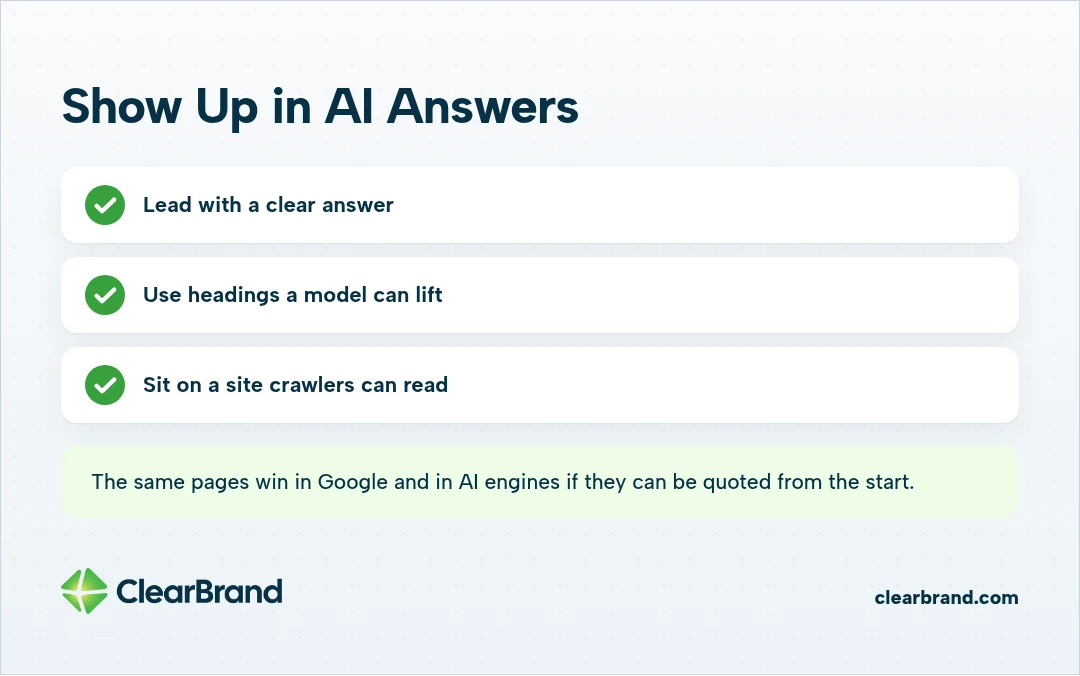
The same pages win both if they lead with a clear answer, use headings a model can lift, and sit on a site that crawlers can read. Third-party reviews and consistent product facts help models mention you without guessing.
Structure the early pages so they can be quoted from the start, rather than treating AI answers as a separate project for later. For a fuller picture of how citation works across ChatGPT, Gemini, and Perplexity, see our LLM SEO guide.
When SEO is not the right first bet
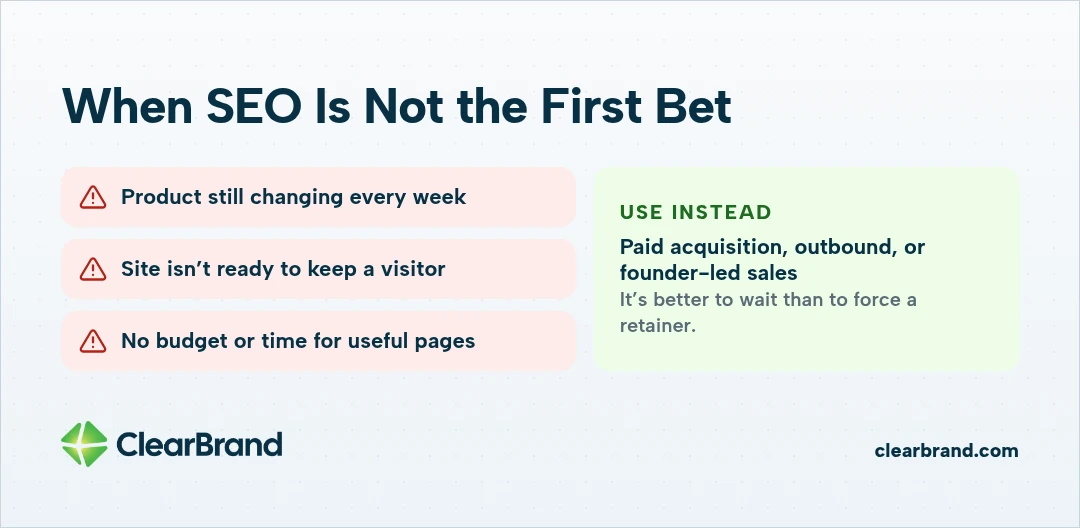
SEO is a poor first bet when the product is still changing every week, the site isn’t ready to keep a visitor, or there is no budget or time to create useful pages.
In those cases, paid acquisition, outbound, or founder-led sales can be the more honest use of money. SEO starts to compound after the story of the product is stable enough to write down.
We focus on helping 7- and 8-figure companies that can support a real content program. If that’s not you yet, it’s better to wait than to force a retainer.
If you want a wider founder playbook that’s not SaaS-specific, including when to start at all, see our SEO for startups guide. If you already have a team and need a planning framework with owners and a 90-day to 12-month roadmap, use our SaaS SEO strategy article.
How long it takes, and how to measure it
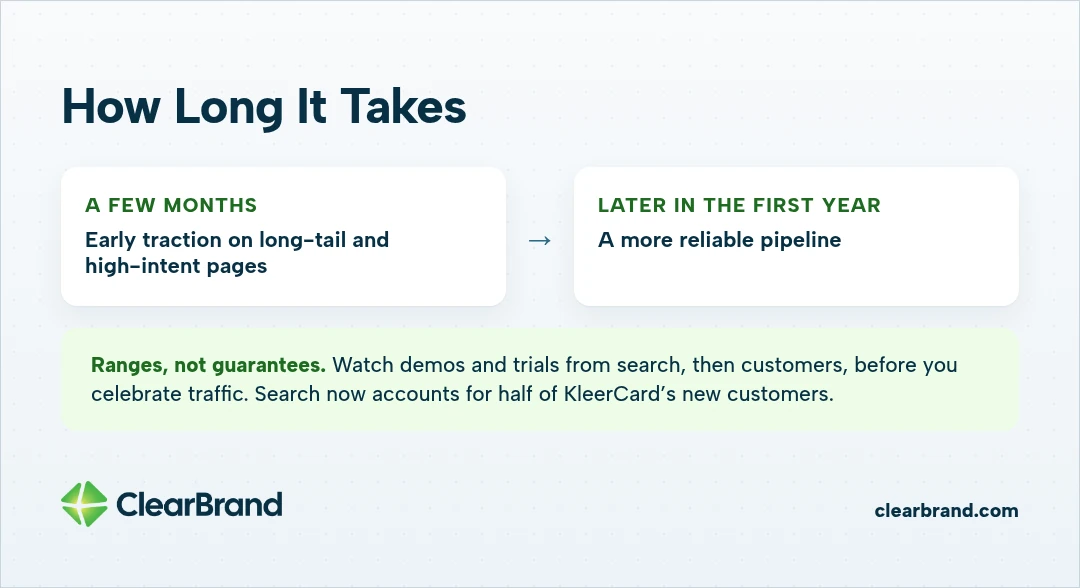
Most SaaS startups should expect early traction on long-tail and high-intent pages in a few months, and a more reliable pipeline contribution later in the first year. Treat those as ranges, not guarantees. Competition, existing authority, and publishing consistency all change the pace.
Watch demo or trial requests from organic search, and later new customers from search, before you celebrate traffic. Rankings and impressions are early signals on the way there.
KleerCard came to us with a live product but almost no organic discovery. The company was only showing up for branded searches, while larger competitors such as Bankrate, Divvy, and Ramp held the terms its buyers used before a purchase.
After we built high-intent pages and a publishing cadence, its blogs started landing in top positions for high-intent searches within days of the first new article going live. A qualified lead arrived from an AI search recommendation, and AI Overviews were sending leads within about two months.
Search now accounts for half of KleerCard’s new customers, and the company outranks much larger competitors for the terms that matter in its niche. You can read the KleerCard case study for the full story.
SEO for SaaS startups FAQ
Does SEO work for SaaS?
SEO works for SaaS when you target the searches buyers already use to evaluate software and you have a site that can convert that traffic. It works poorly when you chase high-volume topics with no path to a trial or a demo.
How long does SEO take for a SaaS startup?
Many teams see early movement on specific, high-intent pages within a few months, and a steadier contribution to pipeline later in the first year. The timeline depends on competition, the quality of the site, and how consistently you publish.
Do we need SEO before we have product-market fit?
If the product and the buyer are still moving, SEO is usually not the right first investment, because the pages you write will go stale before they have a chance to compound. Use search research to learn the language buyers use, then invest in SEO once the offer is stable.
Which pages should a SaaS startup create first?
Start with the product, pricing or demo path, and the comparison, alternatives, use-case, and integration pages that match active buying intent. Broad educational posts can come after those pages exist.
Should we hire a SaaS SEO agency or do this in-house?
If you have a product site, a clear offer, and the budget to keep publishing, an experienced partner can shorten the time to a working system. If you don’t yet have the budget for content, keep the work in-house or wait.
We work with companies that are ready for that program, and we’d rather say so than take a poor-fit retainer. You can see how we approach the work on our SaaS SEO agency page.
Does AI search replace the need for SEO?
AI search doesn’t replace the need for SEO. The same technical health, clear answers, and authority that help you rank in Google also help AI tools find and cite you. You still need the pages, and you need them structured so a model can quote them.
The first bets, then a conversation
If you already have a product site and you want a partner to build the first pages, interview your experts, and grow authority in search and in AI answers, we’d like to talk.
Your free SEO audit is a review of the site and an initial 90-day plan. You keep it whether you work with us or not. We reply within two business days.