

Some of your buyers now ask ChatGPT which tool to shortlist before they open Google. You can’t see those conversations in Search Console, and many dashboards still report on clicks.
The AI visibility metrics I put on a SaaS report are mention rate, AI share of voice, citations, position, sentiment, platform split and AI-referred demos and signups. Pipeline comes first, and the AI numbers sit underneath it as leading indicators.
What Are AI Search Visibility Metrics?
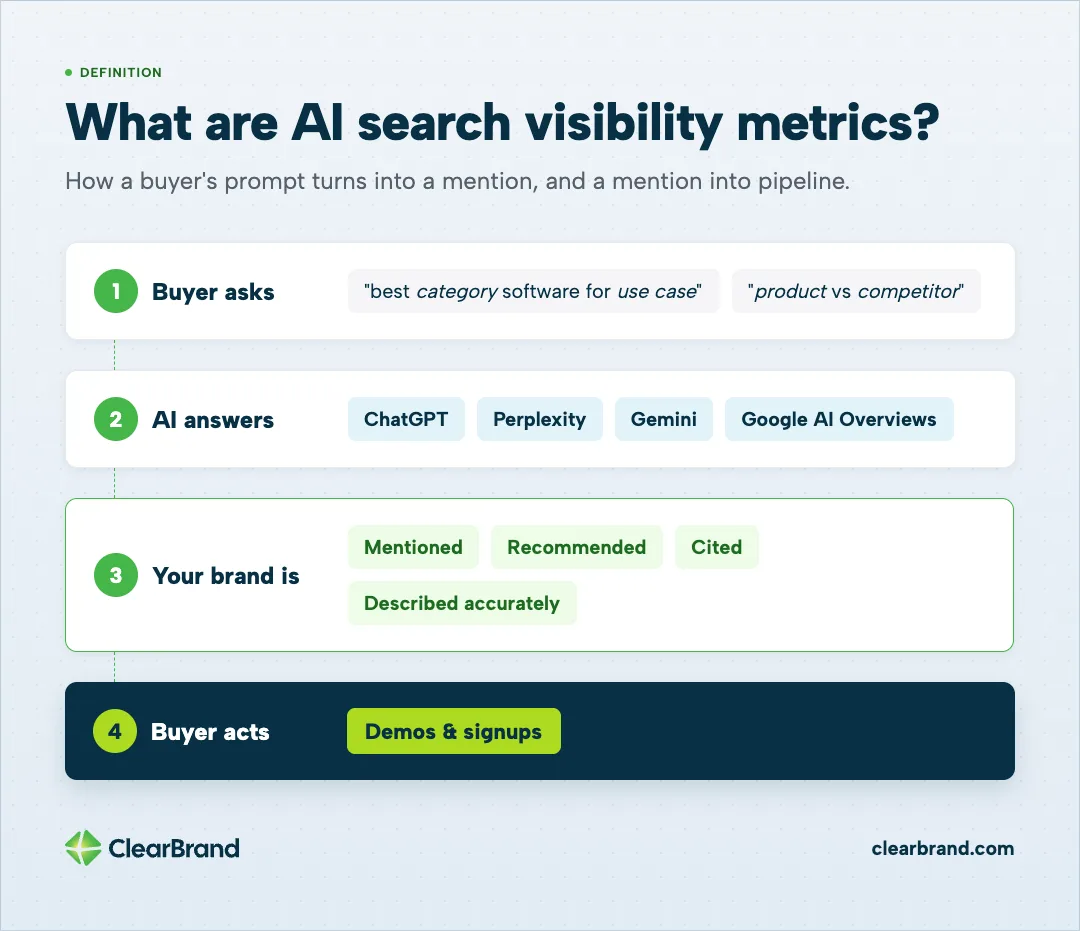
AI search visibility metrics measure how often and how accurately AI assistants like ChatGPT, Perplexity, Gemini and Google AI Overviews mention, recommend and cite a SaaS brand for the prompts its buyers ask, and whether those answers turn into demos and signups.
AI visibility is the share of those answers where your brand shows up at all. The other metrics show where you appear, how you’re described and whether it leads to demos.
Why Clicks and Rankings Miss the AI Layer
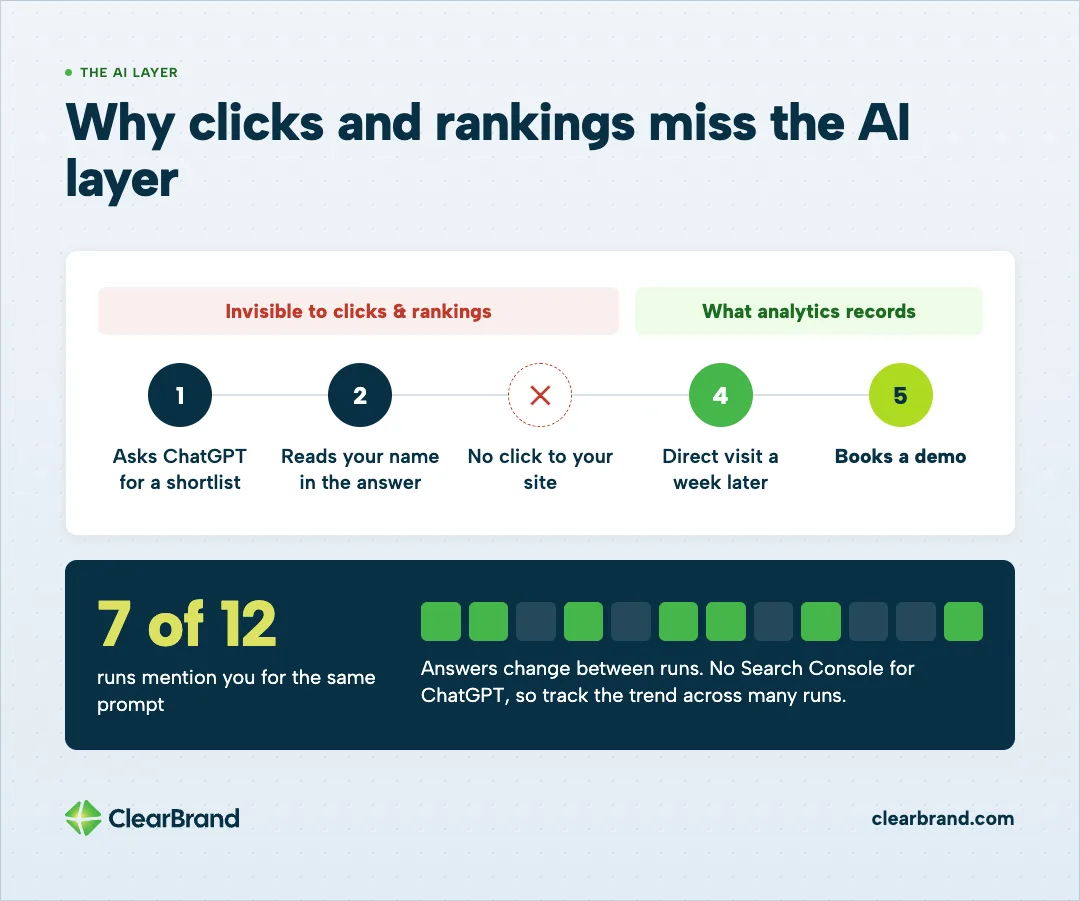
Clicks and rankings miss the AI layer because a buyer can get the answer, and your name, without ever visiting your site. AI Overviews often answer definitional questions on the page, so the click may never happen. A buyer can read your name in a ChatGPT answer and book a demo a week later from a direct visit.
ChatGPT has no Search Console equivalent. You have to run the prompts yourself, or with a tool, on a schedule, and record what comes back. Answers can change from one run to the next, so read trends across many runs rather than any single answer.
I cover the leads-first side of reporting in how we measure SEO when clicks drop.
The 7 AI Visibility Metrics That Matter for SaaS
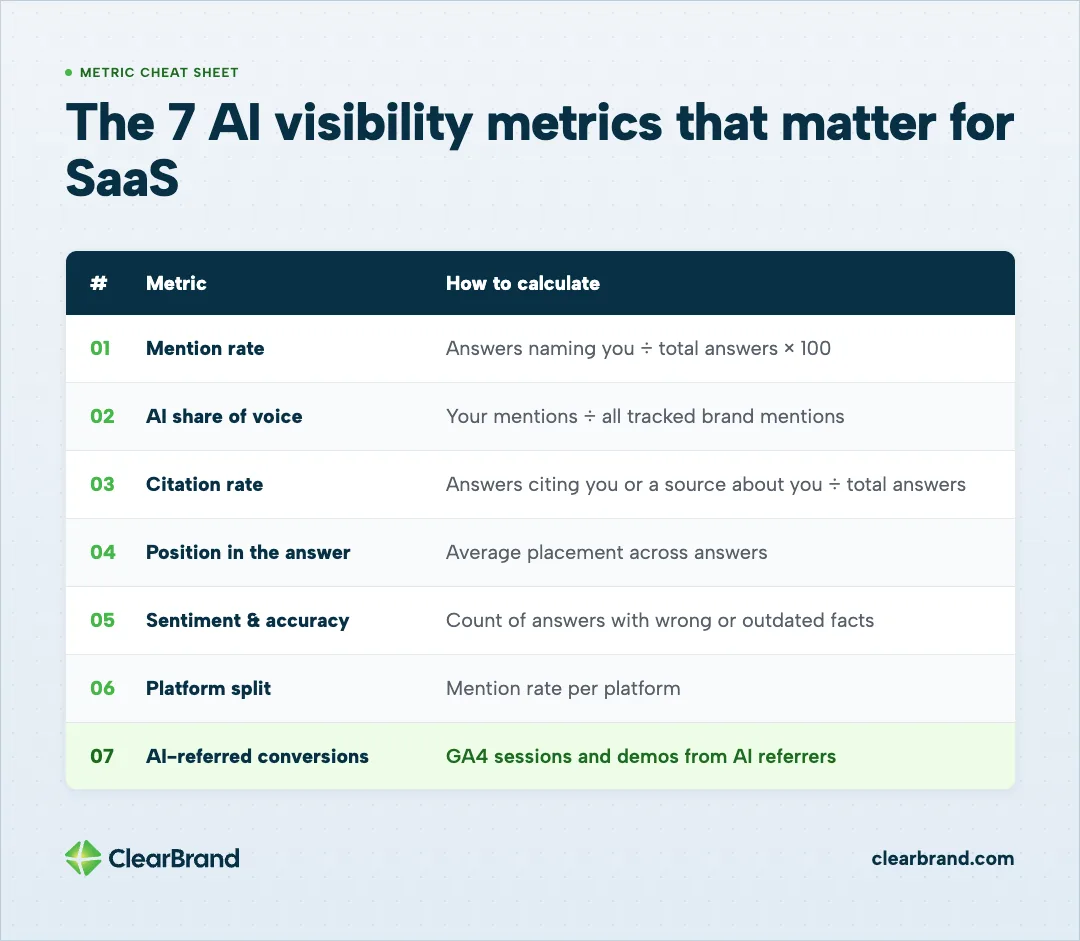
| Metric | What it measures | How to calculate | Why a SaaS team cares |
|---|---|---|---|
| Mention rate (AI visibility score) | How often you appear | Answers mentioning you ÷ total answers on your prompt set × 100 | Your baseline presence in buyer research |
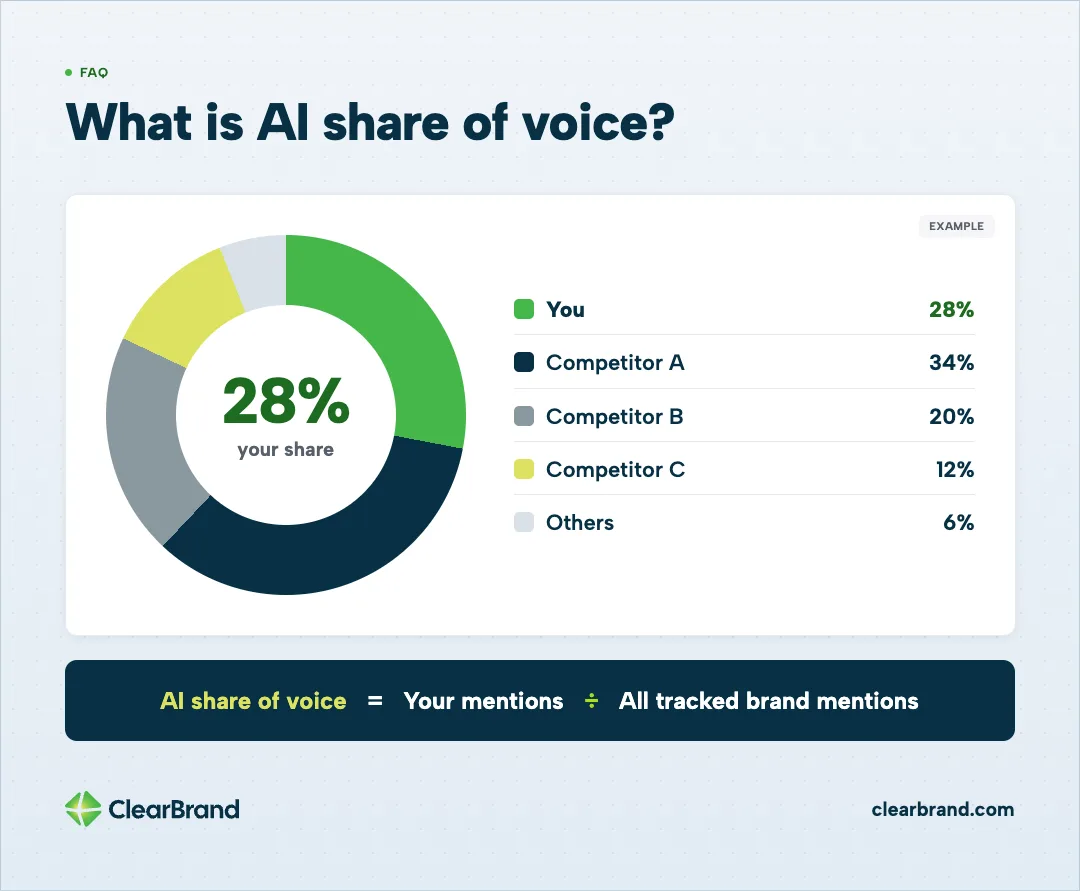
| AI share of voice | Your mentions vs competitors that show up for the prompt | Your mentions ÷ all tracked brand mentions on the same prompts | Shows which brands AI answers recommend most |
| Citation rate | Links to your site or to third parties vouching for you | Answers citing your domain or a source about you ÷ total answers | Tells you which sources AI trusts |
| Position in the answer | Recommended first vs listed lower | Average placement across answers | Earlier mentions are more likely to be read |
| Sentiment and accuracy | Whether features, positioning and plans are described correctly | Count of answers with wrong or outdated facts | Wrong facts cost demos quietly |
| Platform split | Results by engine | Mention rate per platform | Buyers use different assistants |
| AI-referred sessions and conversions | Traffic and demos from AI referrers | GA4 sessions and conversions from AI referrer sources | Ties visibility back to pipeline |
Mention Rate and AI Visibility Score
AI visibility is usually calculated as mention rate: the answers on your prompt set that name your brand, divided by total answers, times 100. Some tools roll mention rate, position and competitor standing into a single AI visibility score, so check what a tool’s score includes before you report it. Keep the prompt set fixed, or the trend line gets hard to read.
AI Share of Voice
AI share of voice compares your mentions with those of competitors that show up for the same prompts. We record every brand that shows up for each term, and your competitors appear in that list on their own.
AI Citation Tracking and Cited Domains
The sources AI assistants cite can differ from the pages that rank, especially in ChatGPT; Google AI Overviews tend to overlap more with organic results. Review sites such as G2 and Capterra, Reddit threads and best-of lists can show up next to vendor sites.
Track which domains get cited for your category, then work to earn a place on them.
Position, Sentiment and Accuracy
Position tells you whether you’re recommended first, placed on the shortlist or listed lower, and accuracy tells you whether the answer describes your product correctly. An answer that names you with an outdated feature list still needs fixing, so log it and correct the source.
Platform Split and AI Overview Tracking
Report ChatGPT, Perplexity, Gemini, Claude, Google AI Overviews and any other assistant you track as separate rows. We track Claude alongside the others. Buyers use different assistants, and a single blended number can hide where you’re strong or missing.
AI-Referred Traffic, Demos and Signups
GA4 already tracks traffic from AI assistants on its own, so you can pull those sessions straight from your reports. Add a “how did you hear about us” field to demo forms, since some AI-influenced buyers arrive direct and won’t show up as AI referrals.
How to Build a SaaS Prompt Set
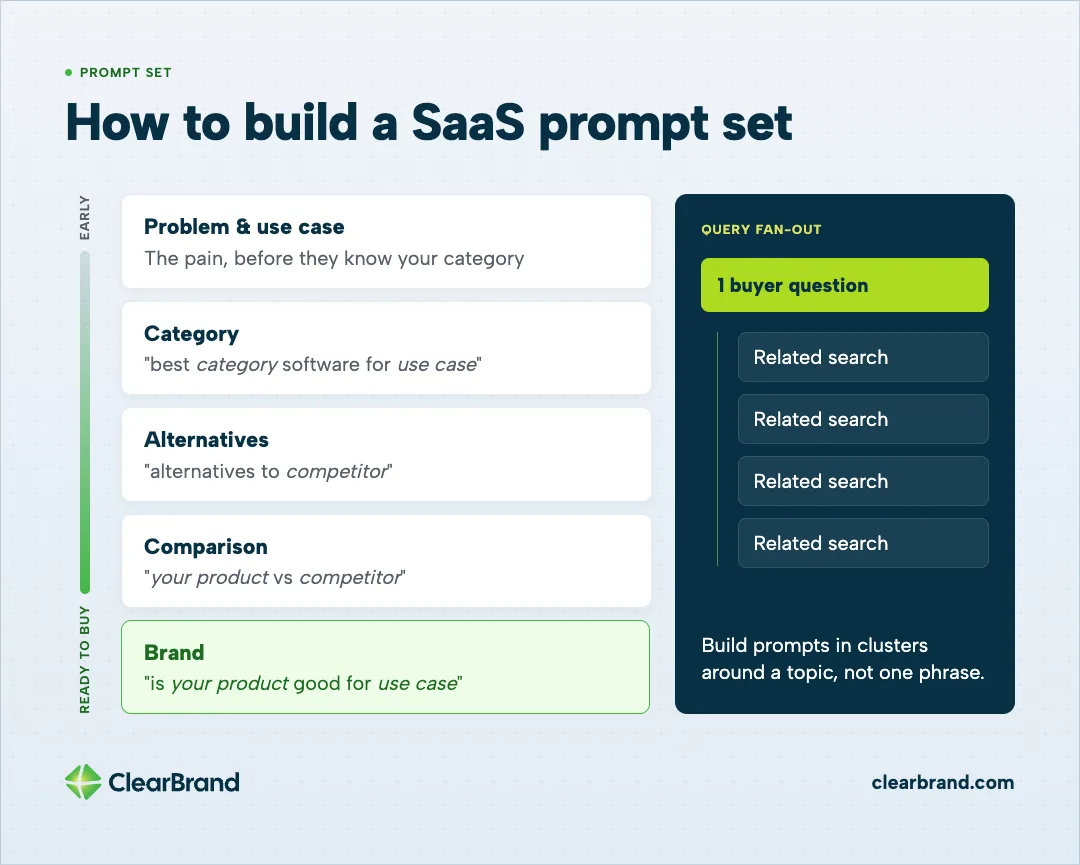
A SaaS prompt set is a fixed list of the questions your buyers ask AI assistants, grouped by the stage of research they come from.
- Category prompts: “best category software for use case.”
- Comparison prompts: “your product vs competitor.”
- Alternatives prompts: “alternatives to competitor.”
- Problem and use-case prompts: the pain your buyer types before they know your category.
- Brand prompts: “what is your product” and “is your product good for use case.”
AI tools may run several related searches behind one question. That’s called query fan-out, so build prompts in clusters around a topic instead of tracking one phrase.
The comparison and alternatives prompts map straight to pages you can build. I cover those in SaaS comparison and alternatives pages.
Keep the set fixed and run it on a regular schedule. Change it only on purpose, and note the date when you do.
How to Measure AI Visibility Without Search Console
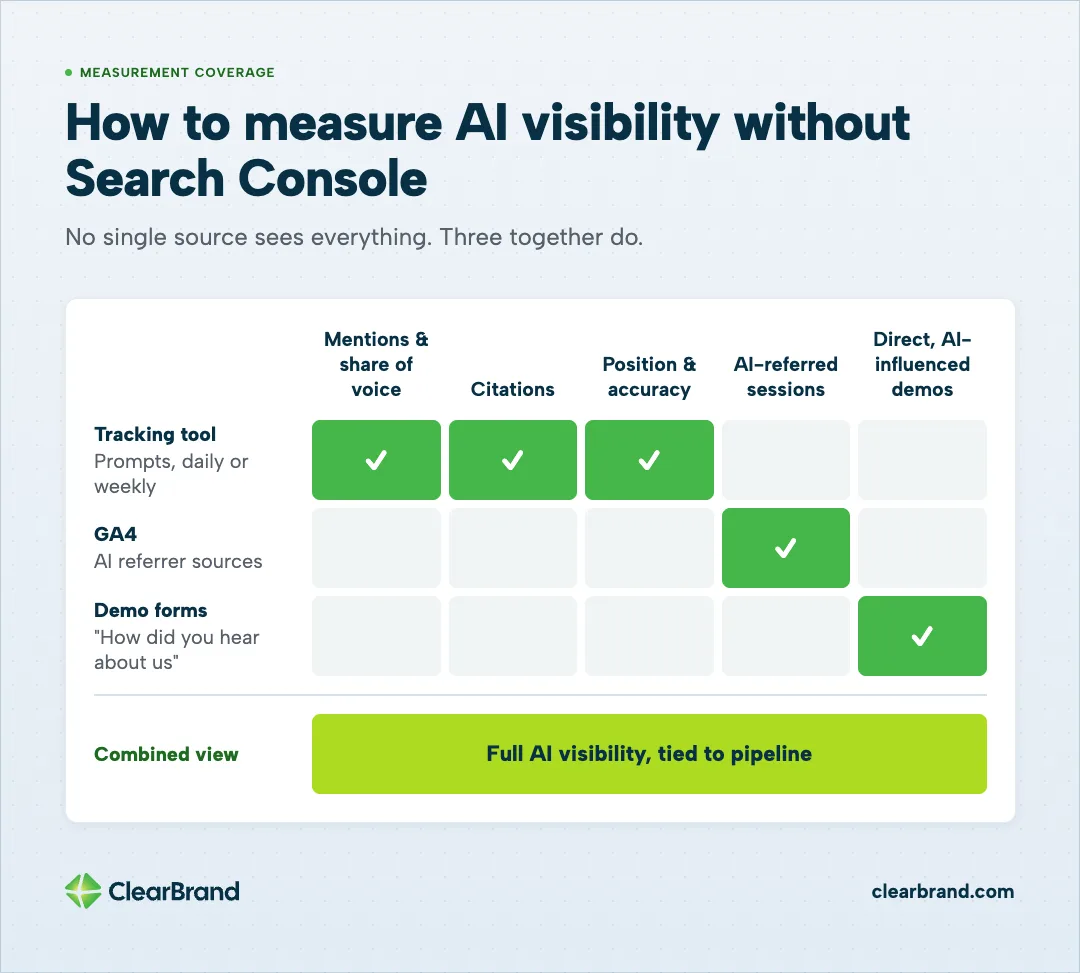
You measure AI visibility without Search Console by combining 3 sources: a tracking tool that runs your prompts, GA4 for AI-referred traffic, and your demo forms for self-reported attribution.
- Run your prompt set on a tracking tool. We use Rankability, which tracks AI search visibility and how it changes over time. We test prompts daily or weekly, depending on the platform and how often its answers change, and clients get the full Rankability report, automatically updated as those searches are run.
- Record mentions, citations, position and accuracy for each answer.
- Pull AI-referred sessions and conversions from GA4.
- Read self-reported attribution from demo and signup forms.
What Belongs on a Monthly SaaS AI Visibility Report
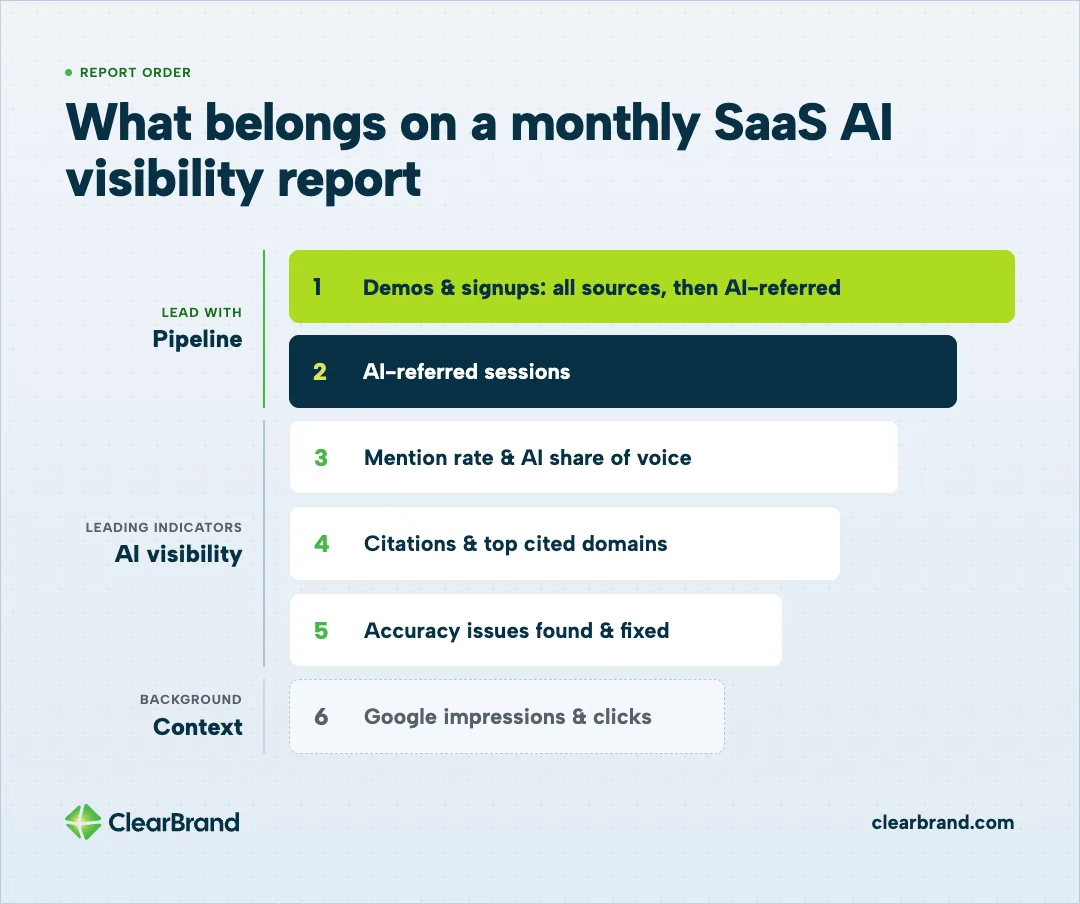
A monthly SaaS AI visibility report should lead with pipeline and put the AI numbers underneath, in this order:
- Demos and signups, all sources, then AI-referred.
- AI-referred sessions.
- Mention rate and AI share of voice on the fixed prompt set.
- Citations and top cited domains.
- Accuracy issues found and fixed.
- Google impressions and clicks as context.
If you’re comparing agencies, AI visibility tracking should be a named line in scope. Here’s what a SaaS SEO retainer includes.
What Is a Good AI Visibility Score?
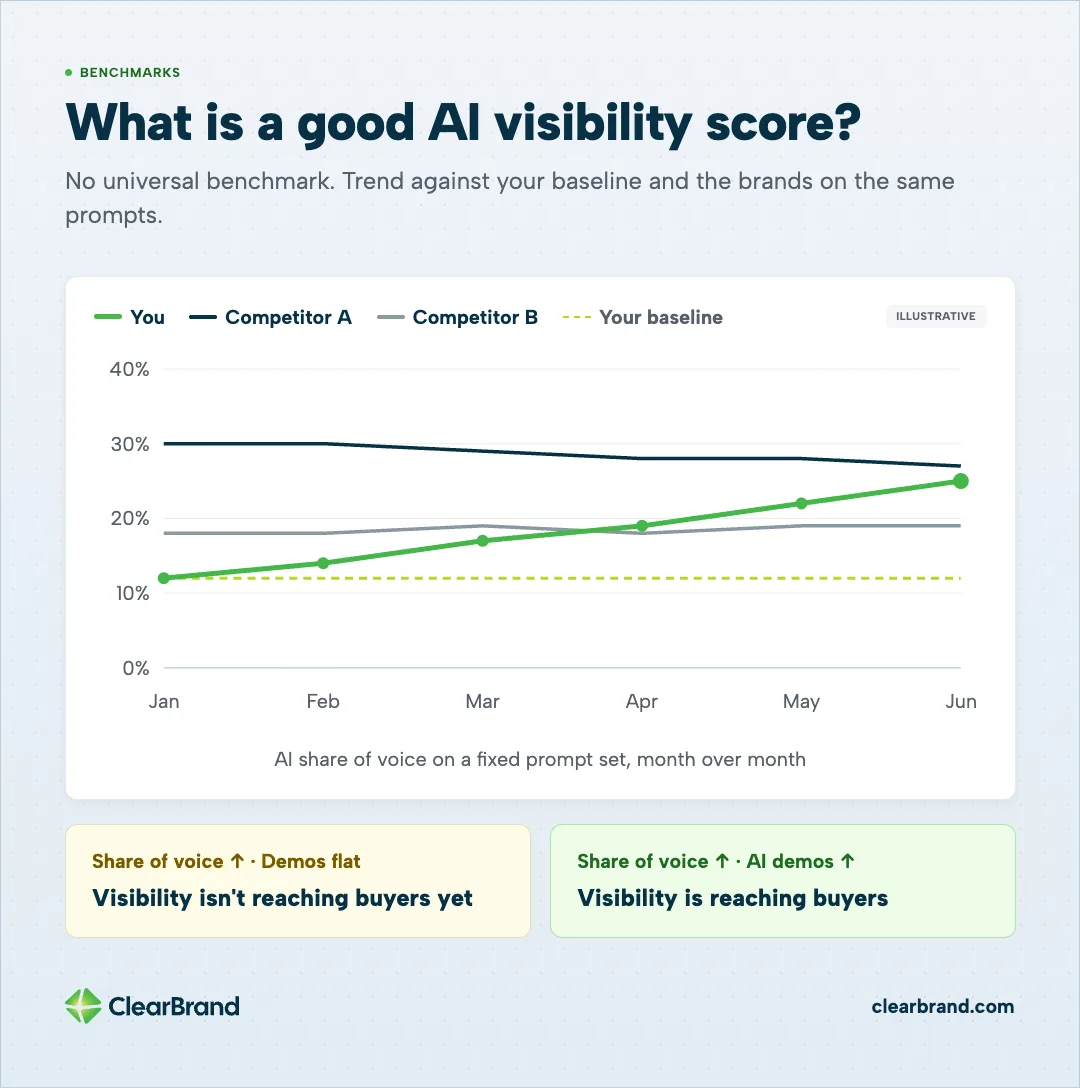
There’s no universal benchmark for an AI visibility score. Trend it against your own baseline and against the other brands that show up on the same prompts, month over month.
A rising share of voice with flat demos usually means the visibility isn’t reaching buyers yet. Rising demos from AI referrers suggests it is.
What Moves These Numbers
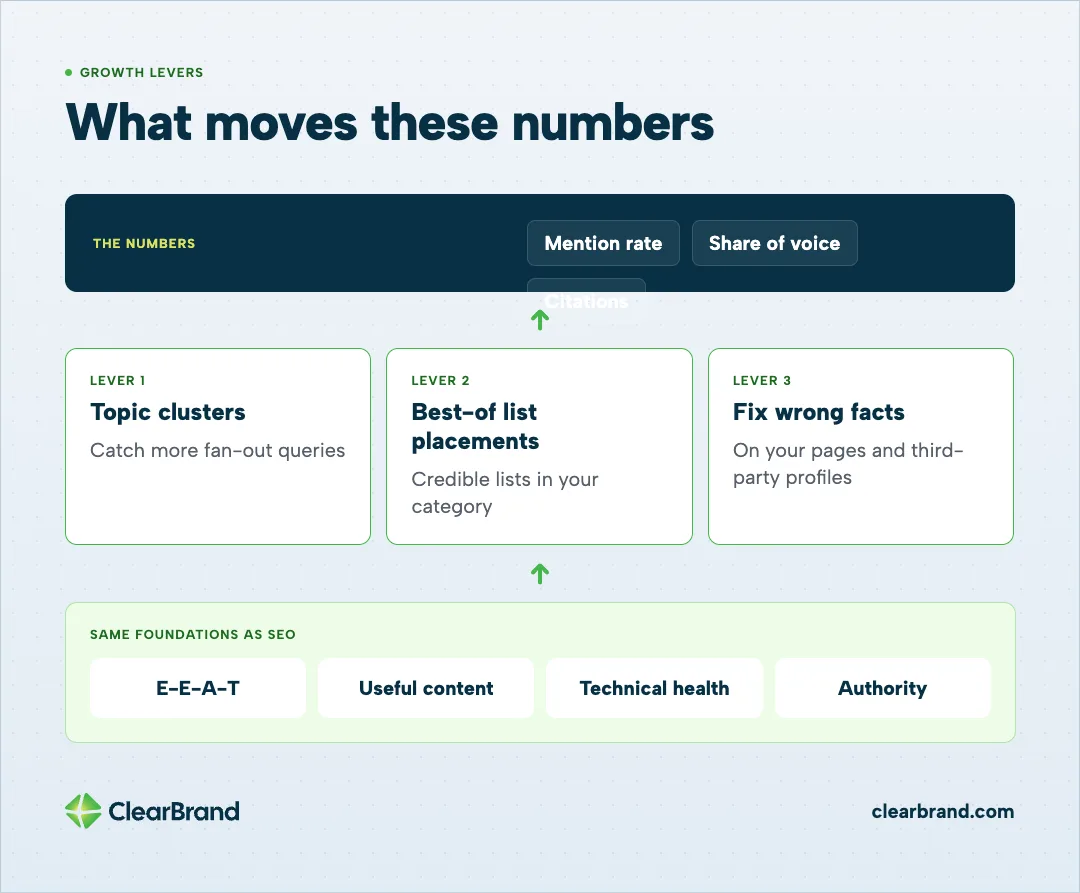
AI search rests largely on the same foundations as SEO: E-E-A-T (Google’s shorthand for experience, expertise, authoritativeness and trust), useful content, technical health and authority from links, mentions and citations. The difference is that an AI assistant runs the searches for the buyer.
- Build topic clusters to raise the odds fan-out queries land on you.
- Get listed in credible best-of lists for your category.
- Fix the facts AI gets wrong on your own pages and third-party profiles.
For tactics by platform, see how to rank in ChatGPT and our GEO guide. When you want a team to run it, our generative engine optimization services cover the AI side end to end.
FAQ
How do you measure AI visibility?
You measure AI visibility by running a fixed set of buyer prompts on AI platforms on a regular schedule and recording how often you’re mentioned, cited and recommended across runs. Pair that with AI-referred sessions and demos in GA4.
What is AI share of voice?
AI share of voice is your brand’s share of all tracked brand mentions in AI answers for the same prompts, compared with competitors that show up for those prompts. It’s the clearest way to see which brands AI answers recommend most in your category.
What KPIs measure AI search visibility?
The core KPIs are mention rate, AI share of voice, citation rate, position in the answer, sentiment and accuracy, platform split, and AI-referred conversions.
Do AI visibility metrics replace SEO metrics?
AI visibility metrics sit next to SEO metrics rather than replacing them. For SaaS, demos and signups stay the headline number, and AI and search metrics both lead into them.
Start With a Report You Can Trust
Start with a fixed prompt set, the AI traffic GA4 already reports and a demo-form question. That gives you a first baseline within about a month, and the trend gets more reliable with each run.
If you want SaaS SEO that’s reported on demos, with AI visibility tracked alongside, see our SaaS SEO agency work.