

You have 2 or 3 SaaS SEO retainer proposals open, and they all promise “content, technical SEO and links.” That promise doesn’t tell you much about what you’ll actually get next month.
A SaaS SEO retainer should name the pages, fixes, links and reports you get every month, and who does the work.
For a software company, that means knowing what belongs in scope, what moves that scope, and what to ask before you sign. For general retainer terms, see our SEO retainer guide.
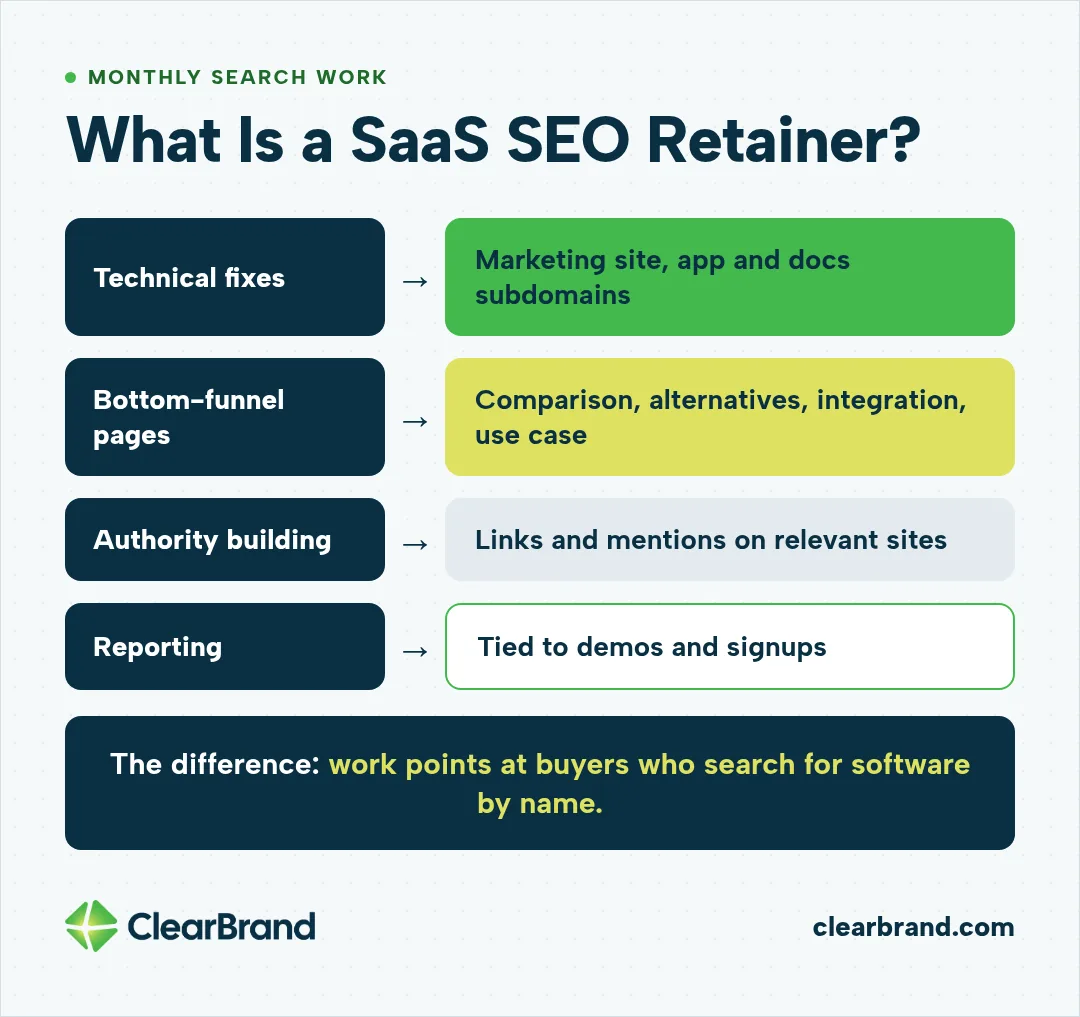
What Is a SaaS SEO Retainer?
A SaaS SEO retainer is a monthly agreement for ongoing search work on a software company’s site. It covers technical fixes, bottom-funnel pages like comparison, alternatives, integration and use-case pages, authority building, and reporting tied to demos and signups.
The difference from a general retainer is where the work points: product-led pages, app and docs subdomains, and buyers who search for software by name.
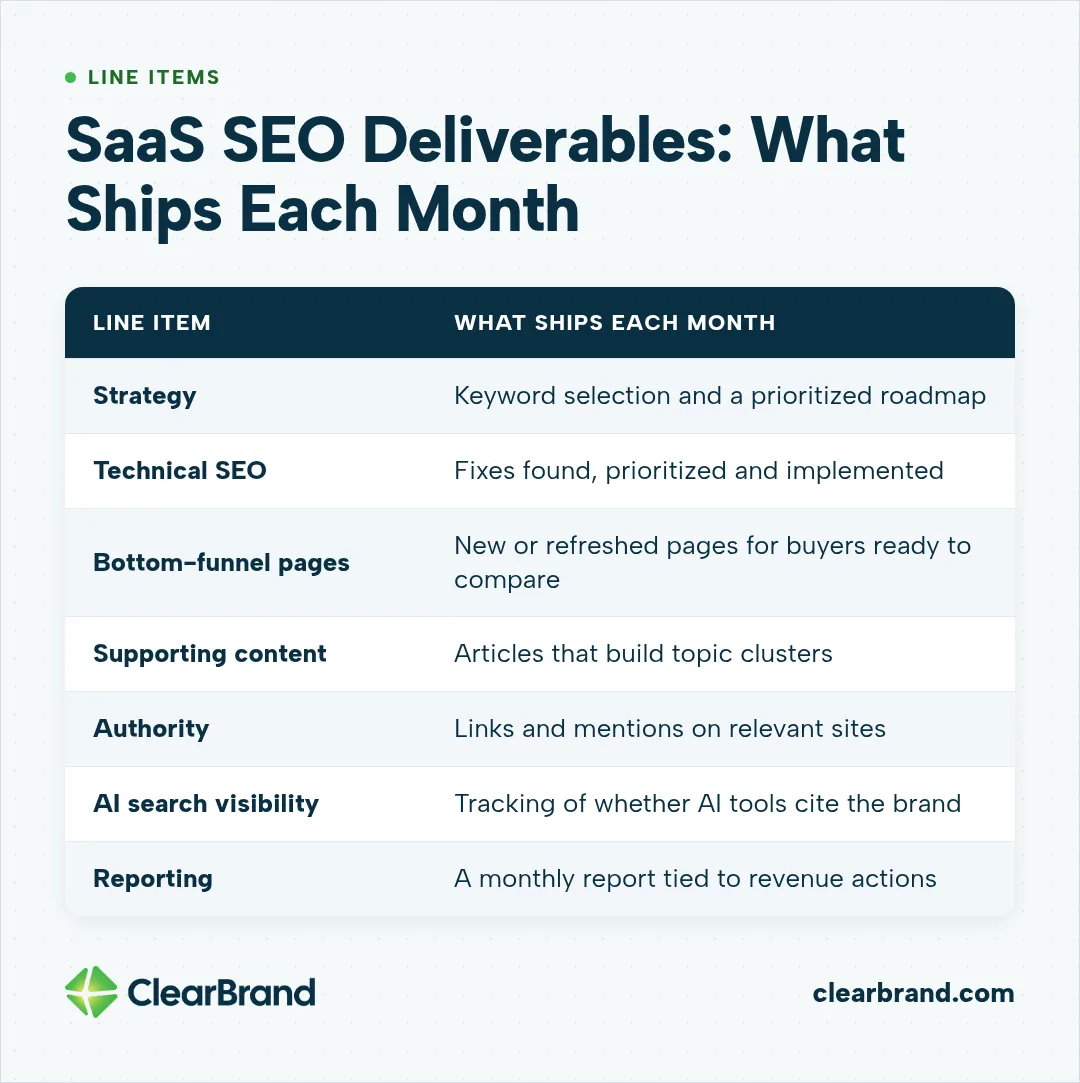
SaaS SEO Deliverables: What Ships Each Month
| Line item | What ships each month | SaaS-specific example |
|---|---|---|
| Strategy and keyword research | Keyword selection and a prioritized roadmap | Competitor, alternatives and category terms mapped to the pages that will target them |
| Technical SEO | Fixes found, prioritized and implemented | JavaScript rendering on marketing pages, app subdomain and docs indexing, Core Web Vitals, schema |
| Bottom-funnel pages | New or refreshed pages that target buyers ready to compare | Comparison, alternatives, integration and use-case pages |
| Supporting content | Articles that build topic clusters around the product category | Problem and workflow guides that link to bottom-funnel pages |
| Authority | Links and mentions earned on relevant sites | SaaS link building through partner, integration and industry publications |
| AI search visibility | Tracking of whether AI tools cite the brand | Regular checks of what AI platforms show for the terms you track |
| Reporting | A monthly report tied to revenue actions | Demos, signups and trials from organic and AI search |
Technical SEO for Software Sites
Software sites run into technical problems that a simple brochure site doesn’t. A SaaS SEO retainer should cover JavaScript rendering, docs subdomains and app subdomains by name.
Marketing pages built on JavaScript frameworks, docs on a separate subdomain, and app login pages that leak into the index all need attention. In first audits, I often find technical problems founders didn’t know about, like slow pages and heading issues. These problems are common, and they can be fixed.
Bottom-Funnel Pages: Comparison, Alternatives, Integration and Use Case
Bottom-funnel pages are the comparison, alternatives, integration and use-case pages that reach buyers who already know the category and are choosing a tool. A retainer should say how many go live each month, which page types they are, and how competitors get picked.
Content Built Around Topic Clusters
Supporting content is a set of connected articles around your product category that link back to your bottom-funnel pages.
AI search tools often run a set of related searches behind the scenes for a single question. A cluster of connected pages gives them more chances to find and cite you, and it shows search engines you cover your category in depth, which SaaS SEO depends on.
Part of what a retainer buys is keyword selection. I’d rather win a smaller, specific market than chase a broad, high-volume search (a head term) that billion-dollar competitors own.
KleerCard, a SaaS client, competes on searches like “best credit cards for churches” instead of the broad small business version. That narrower focus is how it came to outrank much larger competitors for the terms we targeted.
SaaS Link Building and Mentions
Links and brand mentions still help shape which software gets ranked and cited. A proposal should say how many placements to expect and what kind of sites they come from.
For software companies, relevant sources often include integration partners, industry publications and guest contributions. Asking for examples of past placements lets you judge their quality for yourself.
AI Search Visibility Tracking
A SaaS SEO retainer should track whether AI platforms mention and cite your brand, next to organic search. ChatGPT has no equivalent of Google Search Console. We track AI visibility with a tool that goes to the AI platforms, types in the terms we track, and records what shows up on a regular schedule.
The tool we use today is Rankability.
That gives you a record of AI visibility over time, which belongs in the monthly report next to organic search.
Reporting Tied to Demos and Signups
I judge SEO by leads. Impressions and clicks are leading indicators, meaning early signs that come before leads, and AI Overviews now absorb many clicks on definition searches, so a report built on traffic alone can look worse than the business is doing.
A monthly report should show demos, signups or trials from search, next to the leading indicators that predict them. That means conversion tracking on demo and trial forms, connected to the pages that sent the visitor.
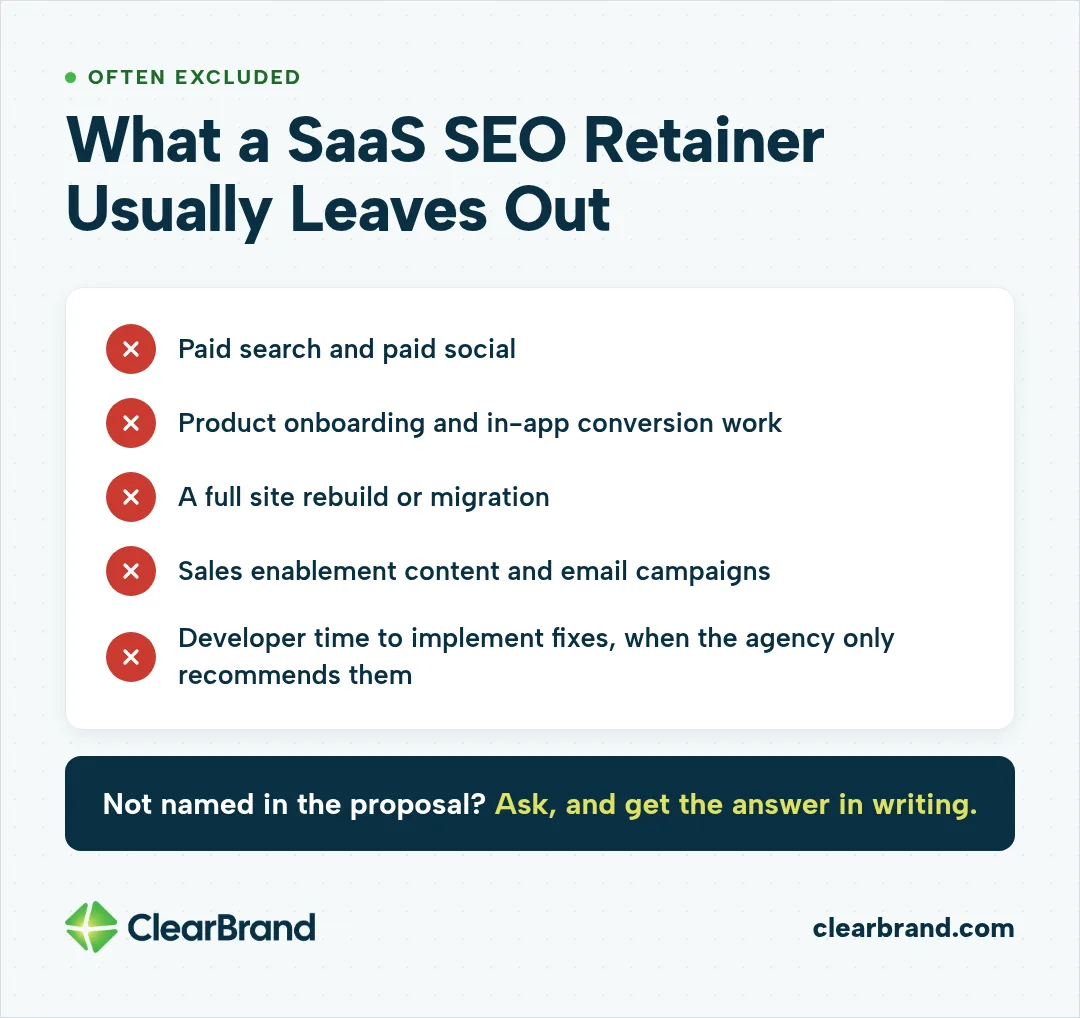
What a SaaS SEO Retainer Usually Leaves Out
Many retainers exclude the following unless the proposal names them:
- Paid search and paid social
- Product onboarding and in-app conversion work
- A full site rebuild or migration
- Sales enablement content and email campaigns
- Developer time to implement fixes, when the agency only recommends them
At one point we grew too fast across too many services, and quality suffered, so we keep our scope to search.
If you need conversion work on demo or signup pages, or help with a migration, ask whether it’s in scope or handled as a separate project. Getting that answer in writing saves a hard conversation later.
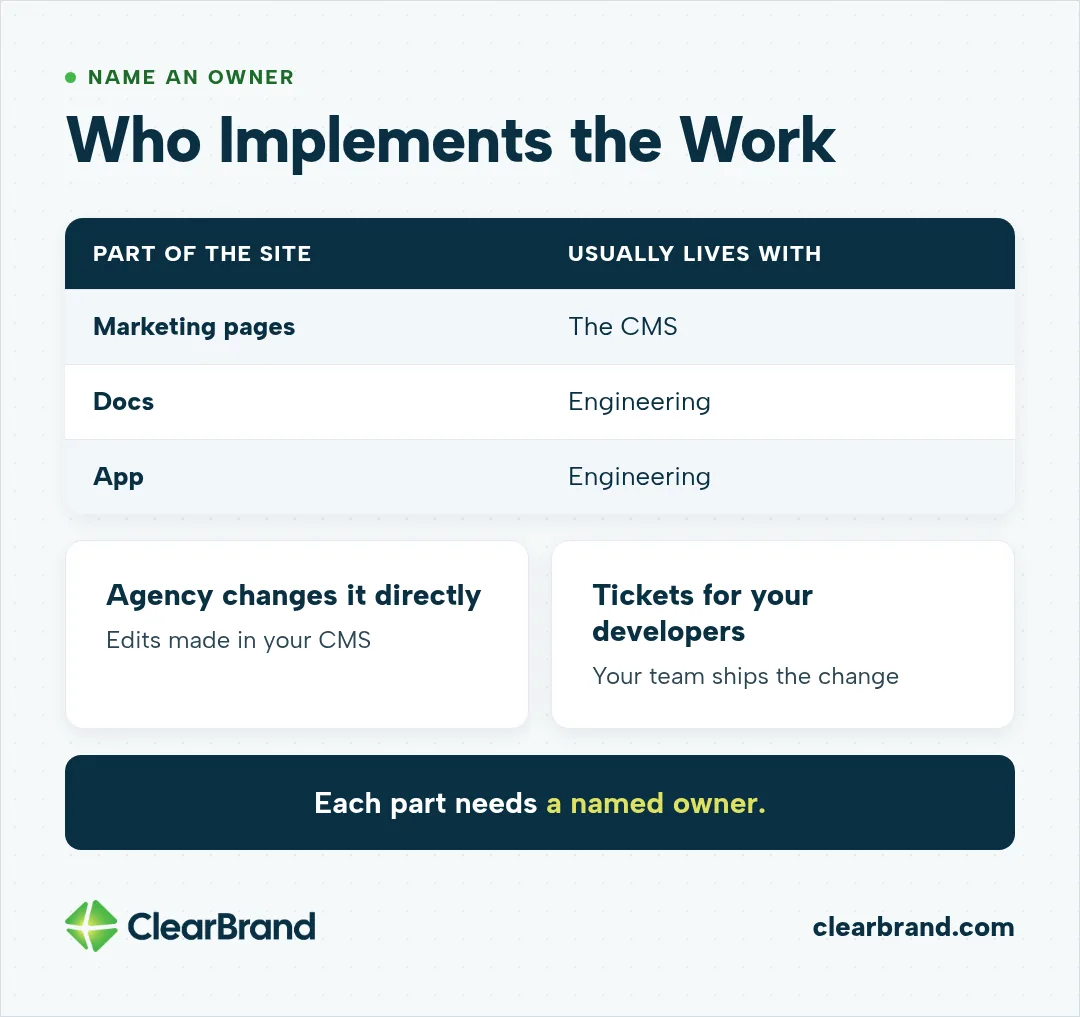
Who Implements the Work
A proposal can list a long set of technical fixes and still never get any of them done. Ask whether the agency makes changes directly in your CMS or hands tickets to your developers.
On software sites, marketing pages often live in a CMS while docs and the app sit with engineering. Each part needs a named owner, and the proposal should spell out which changes the agency makes itself and which become tickets for your team.
If you’re still deciding between an agency and an in-house hire, see SaaS SEO agency vs in-house.
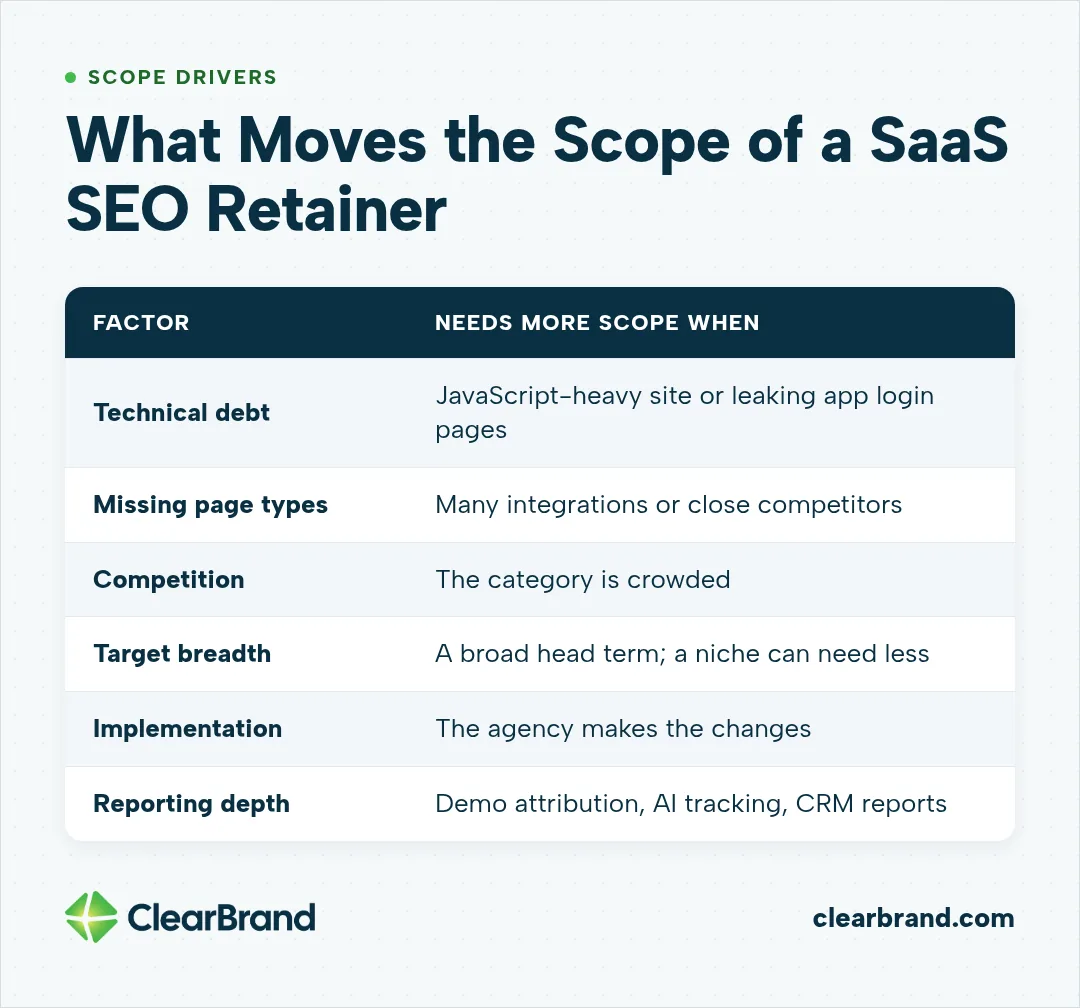
What Moves the Scope of a SaaS SEO Retainer
Two SaaS companies can ask for the same retainer and need very different scope. These factors change it most:
- Technical debt. A JavaScript-heavy marketing site, or an app subdomain whose login pages leak into Google’s index, needs more fix time up front.
- Page types you’re missing. A product with many integrations or close competitors needs more comparison, alternatives and integration pages.
- How competitive your market is. A crowded category needs more content and more authority to move.
- How narrow your target is. A specific, winnable niche can need less volume than a broad head term.
- Who implements. Scope grows when the agency makes the changes instead of handing tickets to your team.
- Reporting depth. Demo and trial attribution, AI visibility tracking and CRM reporting each add work.
How to Compare SaaS SEO Retainer Quotes by Output
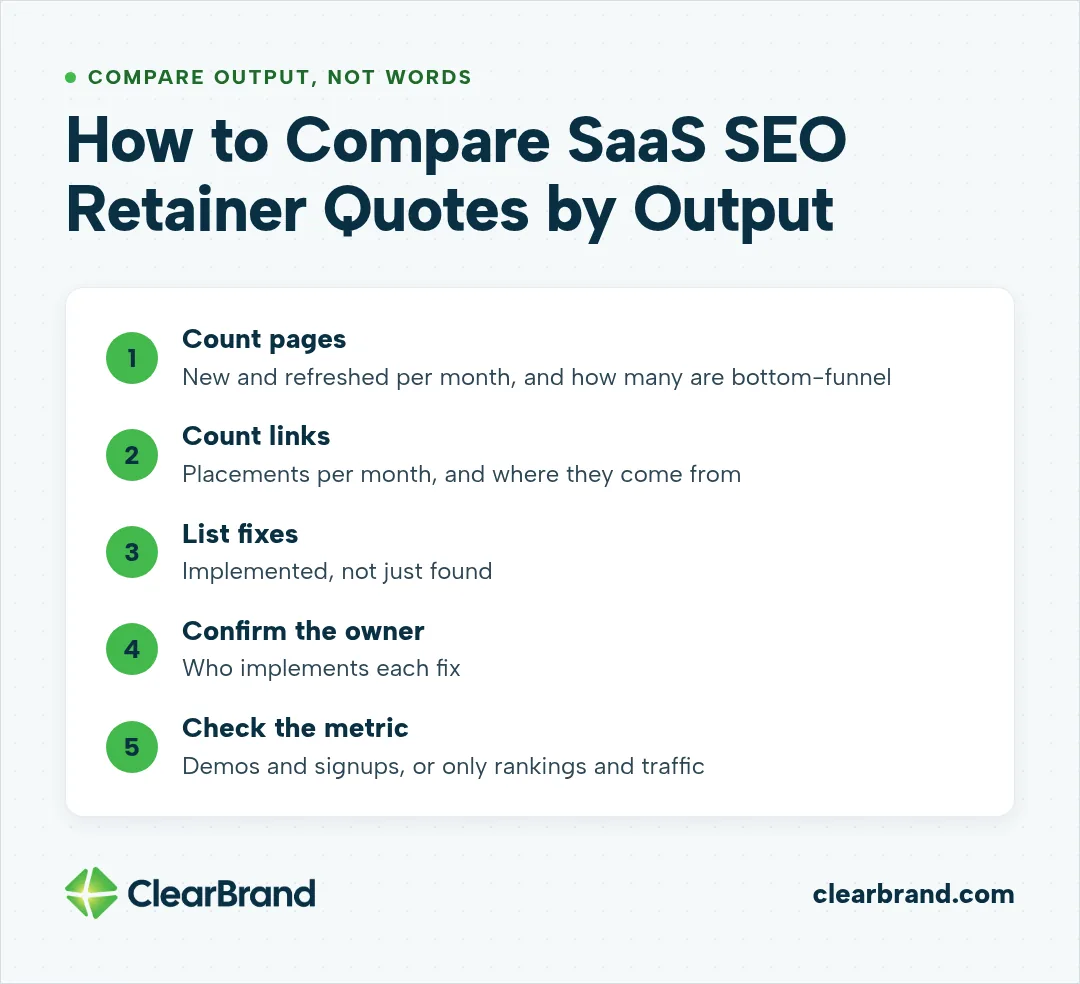
Proposals for SaaS SEO services often use the same words for very different work. Price alone can hide what you get, so compare proposals on what ships each month:
- Count the new and refreshed pages per month, and how many are bottom-funnel.
- Count the links or placements per month, and ask where they come from.
- List the technical fixes that get implemented, not just found.
- Confirm who implements each fix.
- Check the reporting metric: demos and signups, or only rankings and traffic.
What each proposal actually ships can be hard to see on a sales call. Putting the line items side by side makes the differences easier to spot.
What to Ask in a Quote
- Which pages ship each month, and how many are comparison, alternatives or integration pages?
- Which technical fixes will you implement on our marketing site, docs and app subdomain?
- Does the retainer include writing and publishing the pages, or only strategy and audits?
- How will you track demos, signups and trials from search?
- How will you report on AI visibility?
- Who on your side and who on ours does each piece of work?
What to Expect by Month 3 and Month 6
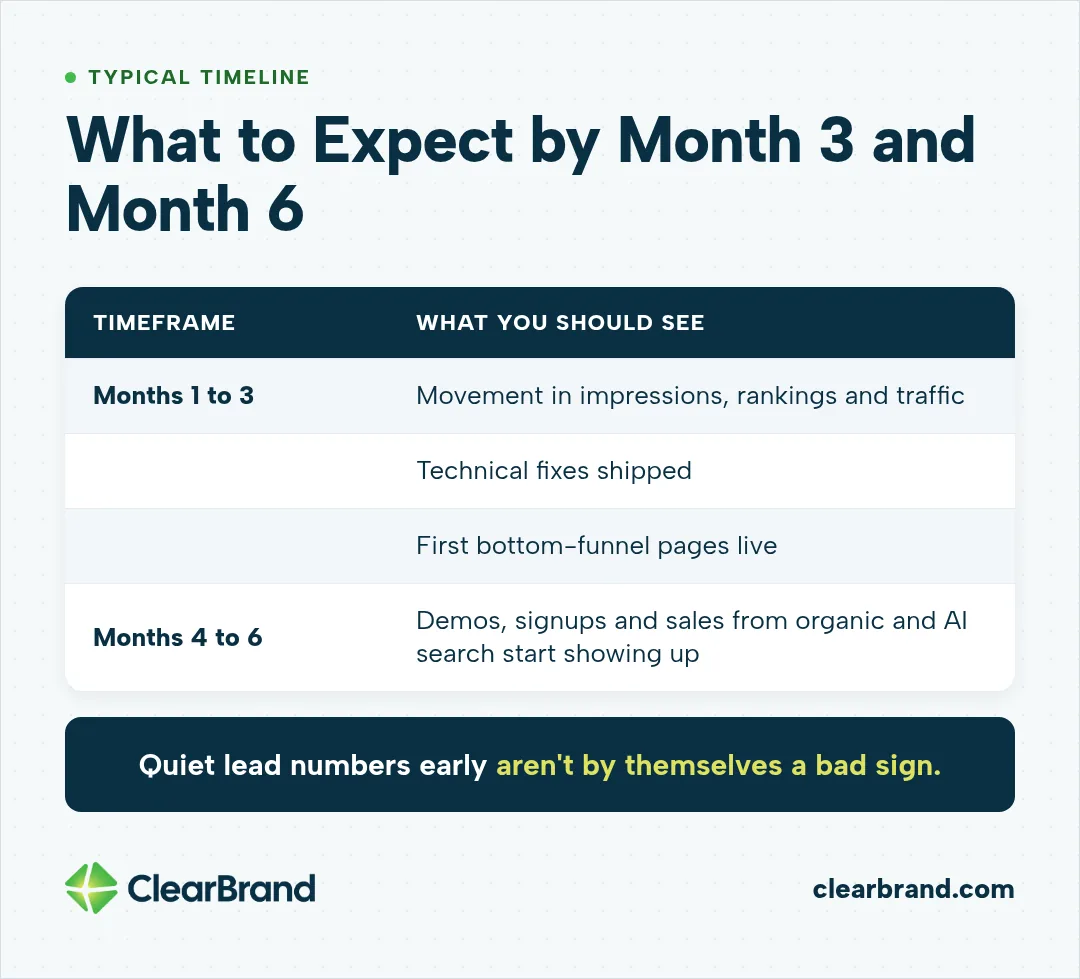
In the first 3 months, expect leading indicators and finished work. Months 4 to 6 are when we expect leads to start showing up.
| Timeframe | What you should see |
|---|---|
| Months 1 to 3 | Movement in impressions, rankings and traffic. Technical fixes shipped. First bottom-funnel pages live. |
| Months 4 to 6 | When we expect demos, signups and sales from organic and AI search to start showing up. |
Many retainers start with an initial term of a few months. If traffic rises without leads, the next step is conversion work that removes friction on the path to a demo or signup.
I won’t promise sales in 90 days. Early months are about leading indicators, so quiet lead numbers in that stretch aren’t by themselves a bad sign.
Red Flags in a SaaS SEO Retainer Proposal
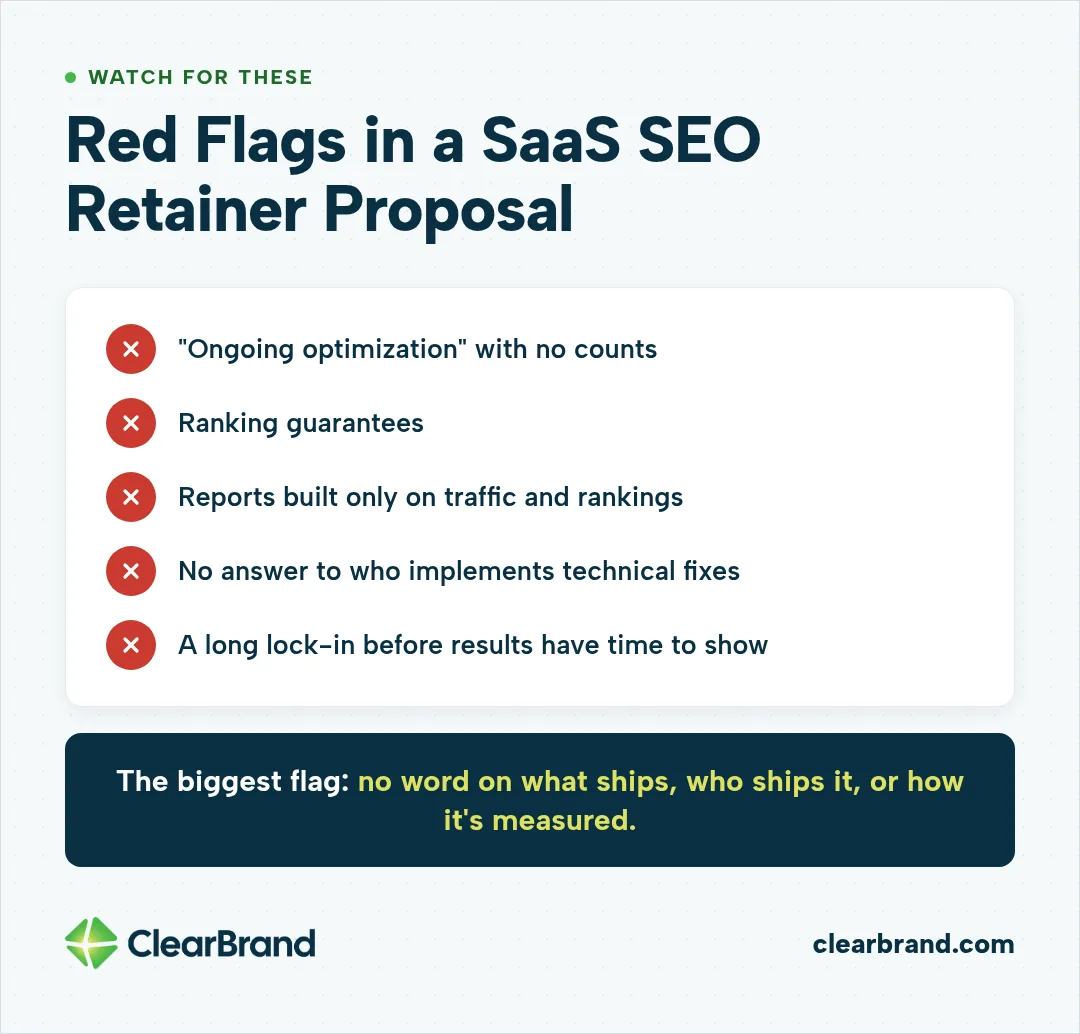
The biggest red flag is a proposal that never says what ships, who ships it, or how results get measured. Watch for these:
- Deliverables described as “ongoing optimization” with no counts
- Ranking guarantees
- Reports built only on traffic and rankings
- No answer to who implements technical fixes
- A long lock-in before any results have had time to show
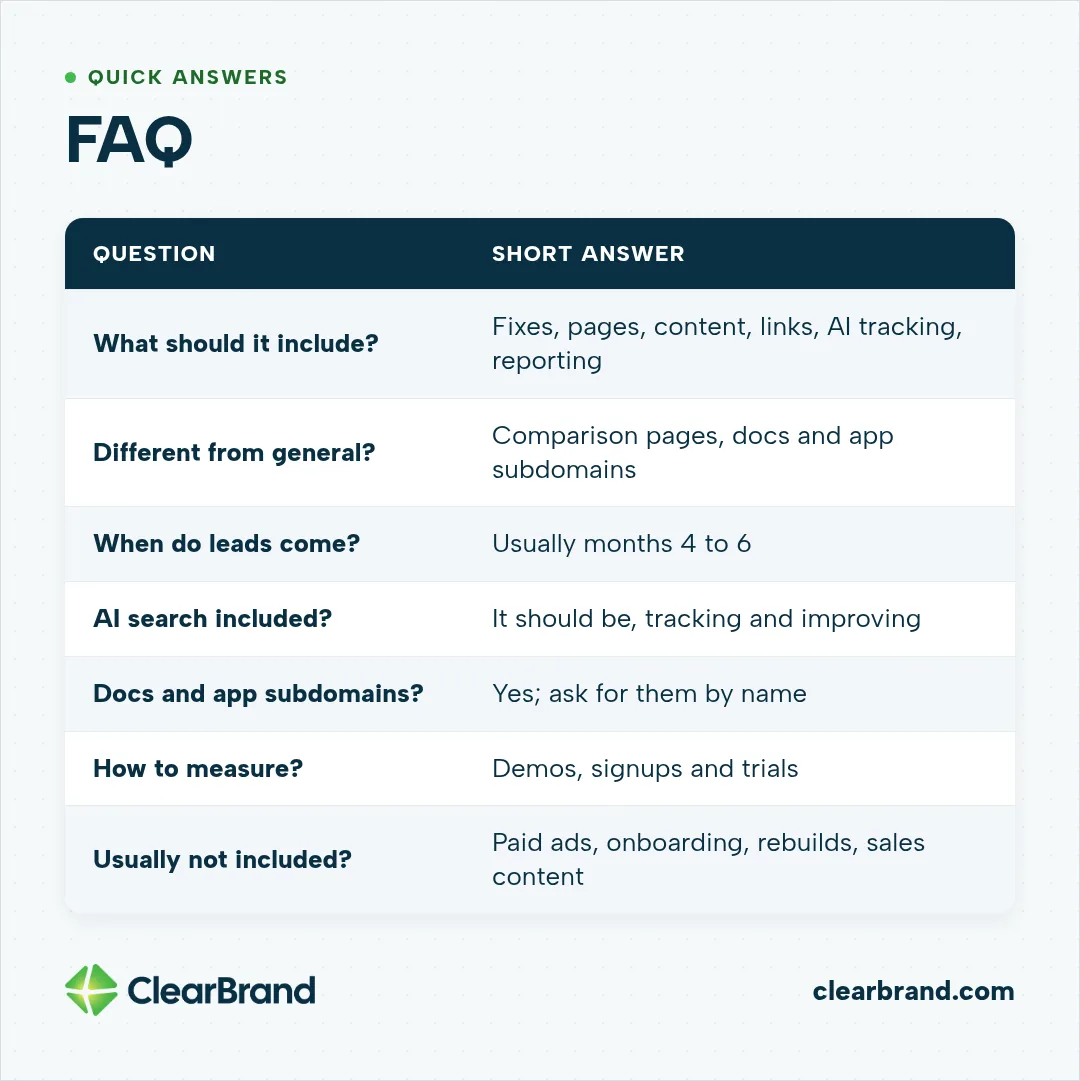
FAQ
What should a SaaS SEO retainer include?
A SaaS SEO retainer should include technical fixes, bottom-funnel pages such as comparison and integration pages, supporting content, links, AI search tracking, and reporting on demos and signups. Each item should come with a monthly count and a named owner.
How is a SaaS SEO retainer different from a general SEO retainer?
A SaaS SEO retainer targets software buyers, so it covers comparison, alternatives and integration pages, docs and app subdomains, and reporting on trials and demos. A general retainer usually centers on service pages and local or category terms.
How long before a SaaS SEO retainer produces leads?
In our experience, impressions and traffic usually move in the first 3 months, and leads tend to follow in months 4 to 6. Results depend on the site’s starting point and how fast fixes get implemented.
Does a SaaS SEO retainer include AI search optimization?
A SaaS SEO retainer should include tracking and improving how often AI platforms cite your brand. Largely the same foundations drive both: technical health, useful content, and authority.
Does a SaaS SEO retainer cover docs and app subdomains?
A SaaS SEO retainer should cover technical work on docs and app subdomains, including what gets indexed, how JavaScript pages render, and how docs link to product pages. Ask for it by name, because generic retainers often stop at the marketing site.
How should a SaaS SEO retainer measure results?
A SaaS SEO retainer should measure demos, signups and trials from organic and AI search. Rankings, impressions and clicks are leading indicators that show whether those leads are coming.
What does a SaaS SEO retainer usually not include?
Many SaaS SEO retainers exclude paid ads, product onboarding work, full site rebuilds and sales content unless the proposal names them.
Build a Scope Around Your Pipeline
Take this list into your next proposal call and ask for every line item by name. A good agency should welcome it.
If you want a scope built around your product, your buyers and your pipeline, see how we approach SEO for SaaS companies, or read more about how we work as an SEO agency.