

Search the term and you will find people on Reddit arguing that content marketing for SaaS is dead. I understand the frustration behind it. The clicks software teams counted on for years have thinned out.
But the conclusion is wrong. Buyers still research software through content before they ever talk to sales. What changed is where they read it and who gets credit for the answer.
I have spent years building content programs for companies. The teams that win in 2026 build for Google and AI answers at the same time. They measure signups, not pageviews.
This guide covers what SaaS content marketing is and the eight-step framework I use. It also shows results from our own client work, plus how to measure what drives revenue.
What is SaaS content marketing?
SaaS content marketing is the practice of creating content that attracts, educates, and retains software buyers across their journey. It answers the questions prospects ask before, during, and after a free trial. Done well, it connects those answers to your product so search engines and AI tools surface you as a trusted source.
The formats look familiar: blog posts, comparison pages, use-case pages, product docs, and customer stories. The goal is less familiar to a lot of founders. You want organic demand that compounds, so you lean less on paid ads every quarter.
Why SaaS content marketing works differently
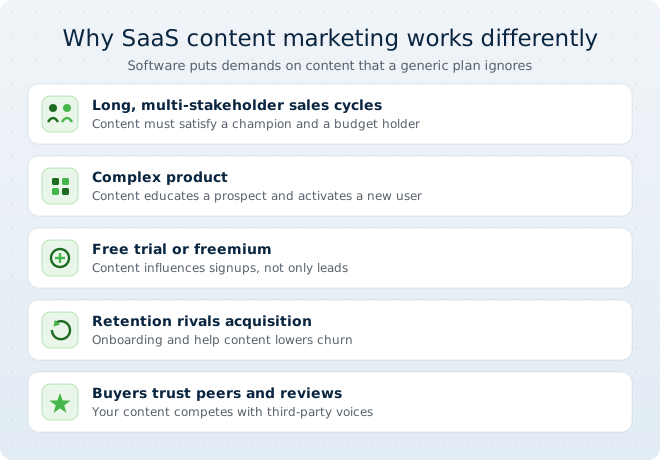
Software carries demands that a typical content plan ignores.
-
Sales cycles run long and pull in several decision-makers, so your content has to satisfy a champion and a budget holder.
-
The product is complex, so content does double duty. It educates a prospect and activates a new user.
-
A free trial or freemium tier means content influences signups, not only leads.
-
Retention weighs as much as acquisition, so onboarding and help content lowers churn.
-
Buyers trust peers and reviews, so your content competes with third-party voices.
Does content marketing still work for SaaS in 2026?
Yes. The payoff moved, and the work changed with it.
Some informational searches now end at an AI Overview instead of a blue link. Discovery shifted. It did not vanish. A buyer reads the answer, remembers the brand behind it, and opens a chatbot later with you in mind.
I have watched this play out in our own work. AI Overview citations can show up faster than first-page rankings when the content carries real experience and authority. We saw it inside two months on a recent client build.
The model now rewards being the source an AI engine quotes. That means clear answers, clean structure, and content an engine can lift without guessing. Our pages on LLM SEO, AEO, and GEO go deeper on the mechanics.
The SaaS content marketing framework
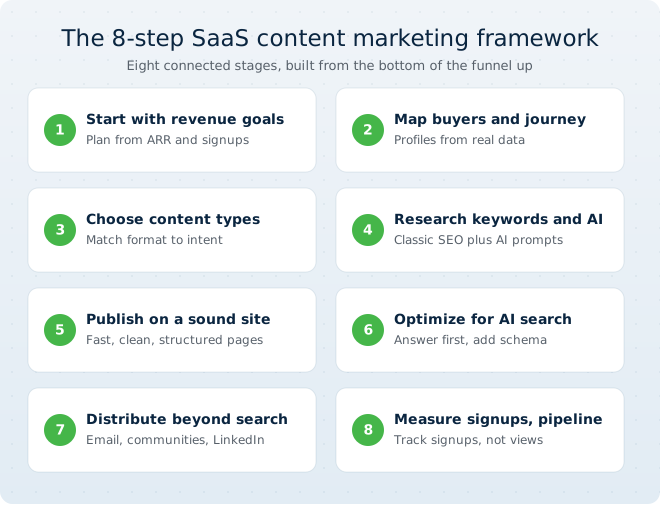
A content program runs on eight moving parts. Each one feeds the next.
-
Start with revenue goals
-
Map your buyers and their journey
-
Choose content types for each funnel stage
-
Research keywords and the questions buyers ask AI
-
Publish on a technically sound site
-
Optimize for AI search and answer engines
-
Distribute beyond search
-
Measure signups and pipeline
1. Start with revenue goals
Set the business goal before the content calendar. For most software companies, that goal ties back to ARR and paid signups.
I build the plan from the bottom of the funnel up. Revenue sits at the bottom, so I start there and work toward awareness.
Write blogs people search for. Posts that flatter your own opinions rarely earn a signup.
2. Map your buyers and their journey
Build buyer profiles from real data. Guesses cost you months of wasted content.
Look at the customers who stay and pay. Study who they are and what problem pushed them to look for a tool. Sit with your support team and read the tickets coming in.
Then map what each profile searches at the awareness, consideration, and decision stages. A founder comparing tools types something different from a manager new to the category.
3. Choose content types for each funnel stage
Match the format to the buyer’s intent. I build the bottom of the funnel first, then climb.
Start with the pages that capture demand: product pages, use-case pages, and comparison pages. These reach buyers who already know they have a problem. Then add how-to content for the middle, and broader education for the top.
Product-led content earns its place here. You show the product solving a real task inside the article, without a hard pitch. A reader learns something useful and sees your tool in motion.
Once content brings the right reader, remove friction from the next step. A buried signup or a clunky demo form wastes the visit.
4. Research keywords and the questions buyers ask AI
Cover classic keyword research, then add the prompts buyers type into AI tools.
I prioritize terms by impact and feasibility. A high-volume keyword you cannot rank for helps no one. A specific term like a comparison or a use case often converts better and ranks faster.
Before I write, I look at who already ranks. If a search shows lists and directories instead of articles, an article will struggle there. Match what you build to the format that already wins.
The newer layer is AI. Buyers now ask ChatGPT and Google’s AI Overview full questions. Group those questions by funnel stage and write a direct answer for each one.
5. Publish on a technically sound site
Content only ranks if the site underneath it cooperates. Speed, clean structure, and proper heading tags decide whether Google and AI engines can read your page.
I use real heading tags for headings and keep the structure consistent. Lead each page with the answer. A giant image at the top pushes that answer down and tests the reader’s patience.
Custom graphics beat stock photos for both readers and search engines. Link out to a trusted source or two, the way a good reference list builds trust in a book.
Platform matters more than founders expect. We build on Webflow because it gives us fast, clean, well-structured pages without fighting plugins. Our pages on Webflow SEO and whether Webflow is good for SEO cover the details.
6. Optimize for AI search and answer engines
AI engines reward content they can lift without guessing. I write the direct answer first, then the context underneath it.
Define your terms plainly so an engine knows what your page is about. Keep one idea per section and use consistent structure. Add schema so the engine can parse the page, and cite trustworthy sources so it reads your content as reliable.
This is the work behind a citation in an AI Overview or a ChatGPT answer. Our GEO and AEO pages break down the mechanics step by step.
7. Distribute beyond search
Search builds the foundation. It is not the whole plan.
Send every new piece to your email list, where you own the audience. Share it in the communities your buyers already trust. For B2B software, LinkedIn carries more weight than most other social channels.
When a piece is good enough, other sites link to it on their own. Those links lift the whole domain. One long article can also feed a month of smaller posts.
8. Measure signups and pipeline
I set up tracking before I publish a single post. Without a baseline, an early win looks like noise and the team loses faith.
For software, the scoreboard starts at the bottom of the funnel. Trial signups and pipeline matter more than pageviews. The full measurement model comes next.
How to measure SaaS content marketing
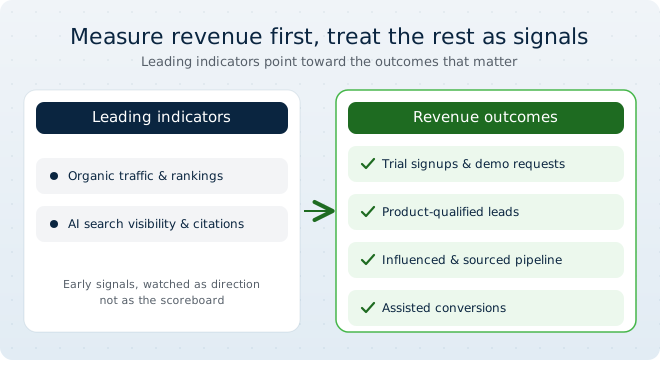
The metrics that matter for software line up by business value:
-
Trial signups and demo requests attributed to content
-
Product-qualified leads from content-sourced accounts
-
Influenced and sourced pipeline
-
Assisted conversions across multi-touch journeys
-
Organic traffic and keyword rankings as leading indicators
-
AI search visibility, meaning citations and mentions in AI Overviews and chatbots
Most software teams I meet have Google Analytics installed but never set upSearch Console. Start there. It shows the exact searches you appear for and how often people click.
Attribution in software is messy. Buying journeys run long and touch many pages, so first-touch and last-touch both mislead. I weigh assisted conversions and influenced pipeline alongside the final click.
One caution on tools. Third-party traffic estimates often read higher than what Search Console reports. I treat Search Console as the source of truth for client reporting and use the other tools for direction.
SaaS content marketing examples that worked
KleerCard went from near-zero organic to half of new customers
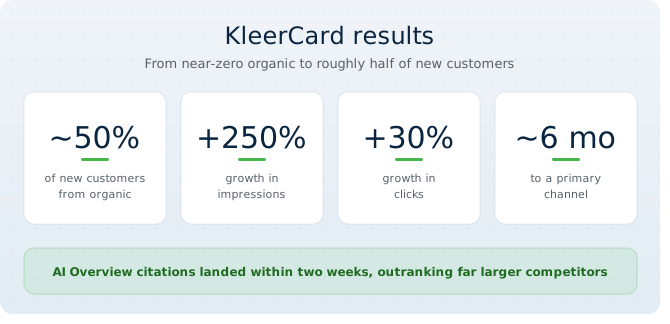
KleerCard is a fintech client of ours. When we started, the site pulled almost no organic traffic.
We did detailed keyword research and filled the gaps top competitors left open. We wrote each blog to be the best resource on the internet for its topic. We tightened titles, internal links, and page speed.
Within about six months, organic search drove close to half of KleerCard’s new customers. Clicks rose more than 30 percent and impressions more than 250 percent. AI Overview citations landed inside two weeks, and the content outranks competitors many times KleerCard’s size. The full KleerCard case study walks through the work.
Patterns worth copying
A few moves repeat across the programs that work:
-
Build the demand-capture pages before the awareness content
-
Structure every piece so an AI engine can quote it
-
Pick topics for revenue, not for raw search volume
Well-known software blogs run on the same logic. Zapier built a library of how-to content that answers real workflow questions and earns steady organic traffic year after year. You can see more results in our case studies.
Common SaaS content marketing mistakes
I see the same mistakes across software teams:
-
Chasing traffic on high-volume terms that never convert. The numbers climb while signups stay flat.
-
Writing top-funnel content before the demand-capture pages exist. The traffic arrives with nowhere to land.
-
Treating the product as off-limits. Product-led content educates and sells at once, and readers respect it.
-
Publishing on a slow, cluttered site. Google and AI engines struggle to read it, and rankings suffer.
-
Measuring pageviews while signups go untracked. You cannot improve what you never recorded.
-
Ignoring AI search until rankings already slipped. By then you are playing catch-up.
When to hire a SaaS content marketing agency
You do not always need an agency. A team with a dedicated writer, an SEO owner, and time to maintain the system can run this in-house. If they can deliver with excellence on a consistent schedule.
An agency earns its fee when speed, technical SEO, and AI search readiness matter more than building the function yourself. If you are early and watching every dollar, start in-house and bring in help once the program proves out.
As you shop for an agency, a few things separate the good from the rest. Look for consistent monthly billing rather than project-by-project quotes, so you can budget. Favor a team of specialists over one person juggling six roles. Watch how a firm prices time, because slow work on an hourly clock costs you twice.
We work with software and technology companies on exactly this kind of program. Our SEO for SaaS and Webflow design pages show how we approach it. For the wider channel mix, see our SaaS marketing strategies guide.
Frequently asked questions
What is SaaS content marketing?
SaaS content marketing creates content that attracts, educates, and retains software buyers across the funnel. It ties that content to your product so search engines and AI tools surface you as a trusted source.
Does content marketing still work for SaaS in 2026?
Yes. Buyer discovery shifted toward AI Overviews and chatbots, so the payoff now comes from being the source those engines cite. Ranking a blue link still helps, and it works alongside AI visibility.
How do you measure SaaS content marketing?
Measure trial signups, product-qualified leads, and influenced pipeline first. Treat traffic, rankings, and AI citations as leading indicators that point toward those revenue outcomes.
How is B2B SaaS content marketing different?
B2B software sales pull in several decision-makers and run long. Your content has to serve both a technical champion and a budget holder across many touchpoints before a deal closes.
How long does SaaS content marketing take to show results?
Results depend on your starting point and your competition. On a recent client program, AI Overview citations arrived inside two months, and organic became a primary acquisition channel within about six months.
Should you hire an agency or keep content in-house?
Keep it in-house when you have a dedicated writer, an SEO owner, and time to maintain the system. Hire an agency when speed, technical SEO, and AI search readiness matter more than building the function yourself.
Where to start
Content marketing still moves software, and the distribution changed underneath it. The teams that win build for Google and AI answers together, and they measure signups instead of pageviews.
Pick one bottom-of-funnel page and make it the best answer on the internet for its search. Structure it so an AI engine can quote it. Track the result from day one.
If you want a partner to build the system with you, our team runs a Growth System Audit. It maps the highest-impact moves for your site. You can start that here.
About the author
Alexander Toth is the founder and CEO of ClearBrand, a Webflow SEO and web design agency. Since 2017, ClearBrand has worked with SaaS, fintech, and B2B technology companies on content and search. Alexander has been featured in a Wall Street Journal bestselling marketing book and has appeared on marketing podcasts. He writes about how software companies earn organic demand that compounds instead of renting it from ads.